CI Integrations Comprehensive Deep Dive: The Architectural Backbone of Modern DevOps
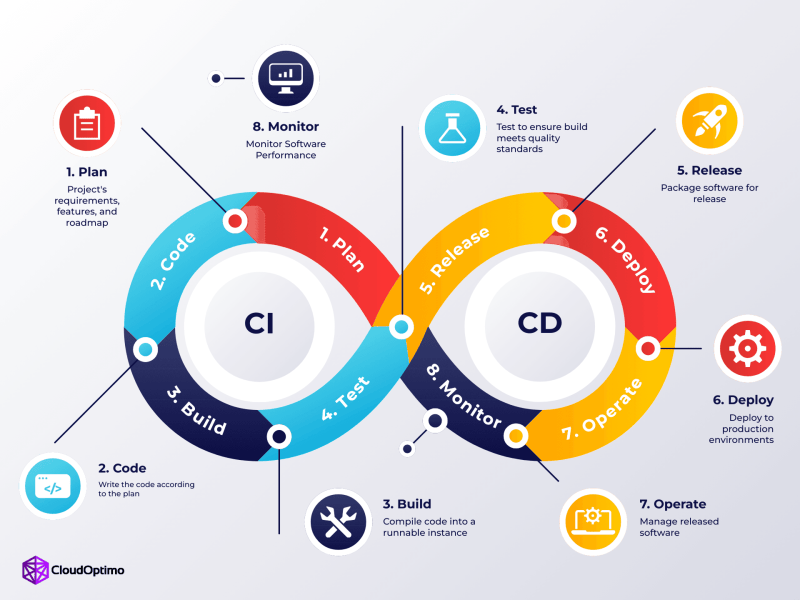
The friction between development velocity and deployment reliability has long defined the limits of software engineering. CI integrations—where continuous integration pipelines bridge disparate tools—have emerged as the silent force reshaping this dynamic. These integrations aren’t just about stitching together version control systems and deployment targets; they’re about creating a neural network of feedback loops that accelerates innovation while maintaining guardrails. The most sophisticated teams treat CI/CD as a platform, not a process, embedding intelligence at every handoff point: from code commit to runtime monitoring.
What separates a functional CI pipeline from a strategic CI integration ecosystem? The answer lies in granularity. Modern CI/CD isn’t monolithic; it’s a constellation of microservices, APIs, and event-driven triggers that react in real time. Take GitHub Actions, for example: its native integrations with AWS CodeDeploy or Slack alerts transform a simple commit into a cascading workflow that includes security scans, canary deployments, and automated rollback logic—all without a single human intervention. This level of orchestration demands more than basic configuration; it requires architectural foresight to avoid integration debt.
The stakes are higher than ever. A 2023 report from Puppet found that 68% of organizations cite "integration complexity" as their top CI/CD pain point, yet only 12% systematically audit their pipeline dependencies. This disconnect reveals a critical truth: CI integrations comprehensive deep dive isn’t just technical—it’s organizational. The tools you choose, the APIs you expose, and the permission models you enforce will determine whether your team moves at DevOps speed or gets bogged down in toolchain sprawl.
The Complete Overview of CI/CD Integration Architectures
CI/CD integrations function as the circulatory system of modern software delivery, pumping artifacts, metadata, and execution context between tools that were never designed to communicate natively. At its core, this integration layer solves three fundamental problems: data synchronization (ensuring version control, build status, and deployment logs stay in sync), state management (tracking pipeline health across distributed systems), and failure isolation (containing errors before they cascade). The most robust architectures treat these as first-class concerns, not afterthoughts. For instance, a pipeline that integrates with Jira for issue tracking must not only pull ticket data but also push build artifacts back into the ticket’s metadata—creating a closed loop that aligns engineering work with business outcomes.The evolution of CI integrations mirrors the broader shift from monolithic applications to distributed systems. Early CI tools like CruiseControl (2001) focused on single-repository builds with minimal external dependencies. Today’s landscape—dominated by platforms like GitLab, CircleCI, and Argo Workflows—demands integrations that span multi-cloud environments, third-party APIs, and internal microservices. This complexity is compounded by the rise of "inner-source" practices, where teams reuse CI templates across projects, requiring integrations to be both flexible and enforceable. The result? A hybrid model where declarative YAML configurations (e.g., GitHub Actions workflows) coexist with imperative scripting (e.g., custom Python hooks in Jenkins) to handle edge cases.
Historical Background and Evolution
The concept of CI integrations emerged from the limitations of early build servers. In 2006, ThoughtWorks’ Martin Fowler documented the first "continuous integration" patterns, but these were largely self-contained—triggering builds on commit, running unit tests, and emailing results. The real inflection point came with the API economy, when tools like Jenkins (2004) introduced plugins to connect to version control (SVN, Git), issue trackers (Bugzilla), and deployment targets (Tomcat). These plugins were rudimentary by today’s standards, often requiring manual configuration and brittle dependencies. Yet they laid the groundwork for what would become a $1.5B CI/CD market by 2023.The turning point arrived with the cloud-native era. Services like AWS CodePipeline (2015) and Azure DevOps (2018) shifted CI/CD from on-premises servers to event-driven architectures, where integrations were no longer point-to-point but part of a larger serverless workflow. This shift forced teams to adopt idempotent APIs (ensuring retries don’t corrupt state) and webhook-based eventing (e.g., GitHub’s `push` events triggering builds). Today, the most advanced integrations leverage service meshes (like Istio) to manage inter-tool communication, treating CI/CD as a distributed system where each component is both a consumer and producer of events.
Core Mechanisms: How It Works
Under the hood, CI integrations rely on three interlocking layers: data planes, control planes, and observability layers. The data plane handles raw payloads—Git commits, Docker images, or Kubernetes manifests—using protocols like Git over SSH/HTTPS, HTTP APIs, or message queues (e.g., RabbitMQ for high-throughput pipelines). The control plane orchestrates these exchanges, typically via YAML/JSON manifests (e.g., GitLab CI’s `.gitlab-ci.yml`) or SDKs (e.g., AWS CDK for infrastructure-as-code). Finally, the observability layer stitches together logs, metrics, and traces from disparate tools into a unified view (e.g., Datadog or Grafana dashboards).Table of Contents
- The Complete Overview of CI/CD Integration Architectures
- Historical Background and Evolution
- Core Mechanisms: How It Works
- Key Benefits and Crucial Impact
- Major Advantages
- Comparative Analysis
- Future Trends and Innovations
- Conclusion
- Comprehensive FAQs
- Q: How do I choose between native plugins (e.g., Jenkins plugins) and API-based integrations (e.g., GitHub Actions)?
- Q: What’s the biggest security risk in CI integrations?
- Q: Can I integrate legacy systems (e.g., COBOL mainframes) into modern CI/CD?
- Q: How do I handle integration failures in distributed pipelines?
- Q: What’s the difference between a CI integration and a CD integration?
- Q: How can I reduce integration debt in an existing CI/CD setup?
A critical but often overlooked mechanism is state reconciliation. When a CI tool like CircleCI triggers a deployment to Kubernetes, it must ensure the cluster’s actual state matches the pipeline’s declared intent. This is handled via reconciliation loops (e.g., Argo Rollouts’ progressive delivery) or CRD (Custom Resource Definitions) that sync pipeline artifacts with Kubernetes objects. Failure here leads to "configuration drift," where deployments succeed in the pipeline but fail in production—a classic symptom of poor integration design.
Key Benefits and Crucial Impact
The value of well-architected CI integrations isn’t just operational; it’s strategic. Teams that treat integrations as a first-class concern achieve 30% faster release cycles (Accenture) and 40% fewer deployment failures (Google SRE). The reason? Integrations eliminate manual handoffs, reduce context-switching, and surface blockers earlier. For example, integrating a static analysis tool (like SonarQube) into a GitHub Actions workflow doesn’t just catch bugs—it automates remediation by linking PR comments to fix instructions, reducing cognitive load on developers.Yet the impact extends beyond engineering. When CI integrations feed data into business intelligence tools (e.g., linking build success rates to revenue metrics), they bridge the gap between technical execution and organizational goals. This is why enterprises like Netflix and Uber invest in internal CI integration platforms—custom frameworks that standardize how tools communicate, ensuring consistency across hundreds of services.
"CI/CD integrations are the difference between a pipeline that works and one that scales. The moment you treat them as an afterthought, you’re building a house of cards." — Kelsey Hightower, Staff Developer Advocate, Google
Major Advantages
- Automated Compliance and Auditing: Integrations with tools like OpenPolicyAgent (OPA) or Prisma Cloud embed security/license checks into pipelines, ensuring compliance without manual reviews. For example, a pipeline integrating with AWS Config can auto-remediate non-compliant cloud resources before deployment.
- Multi-Tool Orchestration: Modern CI platforms (e.g., Tekton) support custom integrations via Kubernetes-native operators, allowing teams to chain together tools like Terraform (IaC), Snyk (security), and Prometheus (metrics) in a single workflow.
- Cost Optimization: Smart integrations reduce redundant processing. For instance, caching Docker layers in GitHub Container Registry (GHCR) via a CI plugin cuts build times by 60% while lowering cloud spend.
- Self-Healing Pipelines: Integrations with chaos engineering tools (e.g., Gremlin) can automatically reroute traffic or roll back deployments if latency spikes, using real-time metrics from tools like New Relic.
- Developer Experience (DX) Enhancements: Tools like Internal Developer Portals (e.g., Backstage) integrate CI/CD data to provide devs with a unified view of their workflows, reducing context-switching between Jira, Git, and deployment dashboards.

Comparative Analysis
| Integration Type | Strengths |
|---|---|
| Native Plugin-Based (Jenkins, GitLab) | Tight coupling with core tooling; low-latency communication. Best for monorepos or single-cloud deployments. |
| API-First (GitHub Actions, CircleCI) | Language-agnostic; supports custom integrations via REST/webhooks. Ideal for polyglot microservices. |
| Event-Driven (Argo Workflows, Tekton) | Decoupled architecture; scales horizontally. Preferred for Kubernetes-native or serverless pipelines. |
| Hybrid (Custom Scripts + SDKs) | Maximum flexibility; handles niche use cases (e.g., legacy mainframes). Requires deep expertise. |
Future Trends and Innovations
The next frontier in CI integrations lies in AI-driven orchestration and policy-as-code. Tools like GitHub Copilot for CI (experimental) are beginning to auto-generate pipeline configurations based on commit messages, while platforms like Crossplane integrate Kubernetes operators with policy engines to enforce governance rules dynamically. Meanwhile, the rise of edge computing will demand CI integrations that deploy to devices (e.g., IoT gateways) with minimal cloud dependency, using protocols like MQTT or WebTransport.Another emerging trend is integration mesh, where CI/CD pipelines become part of a larger service mesh (e.g., Linkerd or Consul). This blurs the line between build-time and runtime integrations, enabling pipelines to dynamically adjust based on real-time traffic patterns or security alerts. For example, a pipeline could integrate with a WAF (like Cloudflare) to auto-block malicious payloads before they reach the build server—a paradigm shift from reactive to proactive security.

Conclusion
CI integrations comprehensive deep dive reveals a discipline that’s equal parts technical and cultural. The tools and APIs matter, but the real leverage comes from treating integrations as a strategic asset—one that aligns engineering workflows with business objectives. Teams that master this balance will move faster, innovate safer, and scale further than those stuck in siloed toolchains.The key takeaway? Don’t just integrate tools. Design for integration from day one. Whether you’re choosing a CI platform or architecting a new pipeline, ask: How will this component communicate with others? What happens when a dependency fails? How will we observe and debug this system at scale? The answers will determine whether your CI/CD ecosystem thrives or becomes a bottleneck.
Comprehensive FAQs
Q: How do I choose between native plugins (e.g., Jenkins plugins) and API-based integrations (e.g., GitHub Actions)?
A: Native plugins offer tighter coupling and lower latency but lock you into a single platform. API-based integrations provide flexibility and multi-tool support but require more maintenance (e.g., handling rate limits, auth tokens). For multi-cloud or polyglot stacks, API-first is preferable; for monolithic setups, plugins may suffice.
Q: What’s the biggest security risk in CI integrations?
A: Credential leakage—hardcoded secrets in pipeline configs or exposed webhook endpoints. Mitigate this by using tools like HashiCorp Vault for dynamic secrets, rotating credentials via CI variables, and scanning pipeline YAML for sensitive data with tools like Trivy.
Q: Can I integrate legacy systems (e.g., COBOL mainframes) into modern CI/CD?
A: Yes, but it requires a hybrid approach. Use adapters (e.g., custom scripts or middleware like MuleSoft) to bridge legacy APIs with modern CI tools. For example, trigger a Jenkins pipeline via a scheduled batch job that exports COBOL artifacts to a shared S3 bucket, then process them in a cloud-native pipeline.
Q: How do I handle integration failures in distributed pipelines?
A: Implement circuit breakers (e.g., using the Hystrix pattern) to isolate failures, and design dead-letter queues (DLQs) to capture and retry failed events. Tools like Apache Kafka or AWS SQS can buffer events during outages, while observability platforms (e.g., OpenTelemetry) help trace failures across tools.
Q: What’s the difference between a CI integration and a CD integration?
A: CI integrations focus on build-time tasks (e.g., pulling code, running tests, packaging artifacts), while CD integrations handle runtime tasks (e.g., deploying to Kubernetes, canary releases, monitoring). However, modern pipelines blur this line—tools like Argo CD integrate both by syncing Git repos with cluster state in real time.
Q: How can I reduce integration debt in an existing CI/CD setup?
A: Audit your pipeline dependencies using tools like dependency-check or snyk container, then prioritize:
1. Deprecating unused plugins (e.g., old SVN hooks).
2. Standardizing on APIs (e.g., replacing custom scripts with GitHub Actions).
3. Implementing a "integration review" process (similar to PR reviews) for new tool additions.
Leave a Comment
Comments are moderated before appearing. The data you submit is processed according to the Privacy Policy of Surfchex.