Why the MEAN Stack Dominates Modern Web Development
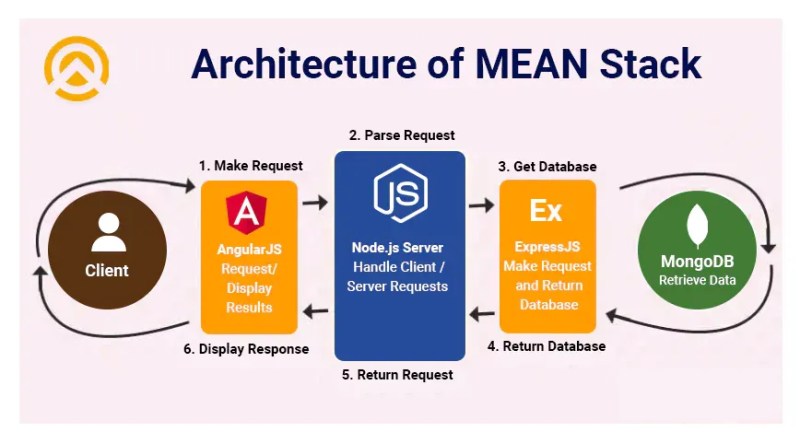
The MEAN stack isn’t just another JavaScript technology—it’s a full-stack revolution. Born from the convergence of MongoDB, Express.js, Angular, and Node.js, this ecosystem redefined how developers approach web applications by unifying database, server, and client layers under a single programming language. While frameworks like Django or Ruby on Rails dominate in certain niches, the MEAN stack’s flexibility and real-time capabilities have cemented its status as the backbone of scalable, high-performance web solutions. Its adoption isn’t just about following trends; it’s about solving problems—from rapid prototyping to handling massive data loads—with a cohesive toolkit.
What makes the MEAN stack particularly compelling is its ability to streamline development cycles. Teams no longer need to juggle disparate languages (Python, PHP, Java) or wrestle with integration headaches between frontend and backend systems. Instead, JavaScript—already a staple in frontend development—extends its dominance to the server side, reducing context-switching and accelerating time-to-market. This isn’t theoretical; companies like Netflix, PayPal, and Uber have leveraged variations of the MEAN stack to build systems handling billions of requests daily. The stack’s modularity also means developers can swap components (e.g., replacing Angular with React) without overhauling the entire architecture.
Yet, the MEAN stack’s appeal extends beyond enterprise giants. Startups and freelancers adopt it for its cost efficiency—open-source tools eliminate licensing fees—and its vibrant community, which ensures rapid troubleshooting and innovation. The stack’s real-time data processing capabilities, powered by Node.js’s event-driven architecture, further distinguish it in applications requiring live updates, such as chat apps or collaborative tools. But its longevity isn’t guaranteed; as web demands evolve, so too must the MEAN stack’s components. Understanding its inner workings, strengths, and limitations is essential for anyone serious about modern web development.
The Complete Overview of the MEAN Stack
The MEAN stack represents a full-stack JavaScript solution where each component serves a distinct yet interconnected role. MongoDB, the document-oriented NoSQL database, replaces traditional SQL systems, offering schema flexibility and horizontal scalability—critical for modern, data-heavy applications. Express.js, a minimalist Node.js framework, handles server-side logic with middleware support for routing, authentication, and API management. Angular, though increasingly supplemented by React or Vue.js, provides a robust frontend framework for dynamic single-page applications (SPAs), while Node.js—JavaScript’s runtime—bridges the gap between client and server, enabling non-blocking I/O operations. Together, these tools form an ecosystem where data flows seamlessly from database to user interface, all within the same language.
What sets the MEAN stack apart is its adherence to the JavaScript ecosystem’s principles: simplicity, modularity, and extensibility. Unlike monolithic frameworks, the MEAN stack allows developers to mix and match technologies (e.g., using React instead of Angular) while retaining the core benefits of JavaScript consistency. This adaptability is why it’s not just a stack but a philosophy—one that prioritizes developer productivity and application performance. However, its success isn’t without trade-offs. The lack of a strict schema in MongoDB, while liberating, can lead to data inconsistency if not managed properly. Similarly, Node.js’s single-threaded nature requires careful handling of CPU-intensive tasks. These challenges, though, are outweighed by the stack’s ability to deliver high-performance, scalable solutions with minimal boilerplate.
Historical Background and Evolution
The MEAN stack’s origins trace back to the early 2010s, when Node.js—created by Ryan Dahl in 2009—began reshaping server-side development. Its non-blocking I/O model promised to address the limitations of traditional servers, which struggled with concurrent requests. MongoDB, launched in 2007, had already gained traction for its document-based approach, aligning perfectly with Node.js’s asynchronous nature. Meanwhile, AngularJS (released in 2010) introduced two-way data binding, revolutionizing frontend development. The convergence of these technologies under the "MEAN" acronym in 2013 by Valeri Karpov marked a turning point: developers now had a unified JavaScript solution for end-to-end web development.
Table of Contents
- The Complete Overview of the MEAN Stack
- Historical Background and Evolution
- Core Mechanisms: How It Works
- Key Benefits and Crucial Impact
- Major Advantages
- Comparative Analysis
- Future Trends and Innovations
- Conclusion
- Comprehensive FAQs
- Q: Is the MEAN stack still relevant in 2024?
- Q: Can I replace Angular with React in the MEAN stack?
- Q: How does MongoDB’s lack of schema affect data consistency?
- Q: Is Node.js suitable for CPU-heavy applications?
- Q: What are the biggest challenges when migrating to the MEAN stack?
- Q: How does the MEAN stack compare to serverless architectures?
Initially, the MEAN stack was met with skepticism, particularly from developers accustomed to SQL databases or server-side languages like PHP or Java. Critics argued that JavaScript’s lack of strong typing or mature tooling for large-scale systems would hinder adoption. Yet, the stack’s simplicity and speed won over early adopters, particularly in startups and agile teams. By 2015, companies like The New York Times and LinkedIn began experimenting with MEAN-based architectures, validating its scalability. The introduction of Angular 2+ in 2016 (later renamed Angular) further modernized the stack, though it also sparked debates about whether Angular or React would dominate the frontend layer. Today, the MEAN stack has evolved into a more flexible "MERN" (MongoDB, Express, React, Node.js) or "MEVN" (MongoDB, Express, Vue.js, Node.js) variants, reflecting its adaptability while retaining its core principles.
Core Mechanisms: How It Works
The MEAN stack operates on a request-response cycle where each component plays a specialized role. When a user interacts with an Angular frontend, the application sends HTTP requests to the Express.js server. Express, leveraging Node.js’s event loop, processes these requests asynchronously, often delegating database operations to MongoDB via Mongoose (an ODM library). MongoDB stores data in JSON-like documents, which Express then transforms into APIs or renders as views. The frontend receives this data and updates dynamically without full page reloads, thanks to Angular’s data binding. This flow ensures low latency and high throughput, particularly in real-time applications like dashboards or collaborative tools.
Under the hood, Node.js’s V8 engine compiles JavaScript to machine code, enabling high-performance execution. Express.js, built on top of Node.js, simplifies routing and middleware management, while MongoDB’s document model aligns with JavaScript objects, reducing serialization overhead. The stack’s strength lies in its ability to handle concurrent connections efficiently—Node.js’s event-driven architecture means it can manage thousands of simultaneous requests without blocking, a feature critical for I/O-bound applications. However, this same architecture can become a bottleneck for CPU-heavy tasks, necessitating strategies like clustering or offloading intensive computations to microservices. The MEAN stack’s design prioritizes scalability over raw processing power, making it ideal for applications where responsiveness and data flow are paramount.
Key Benefits and Crucial Impact
The MEAN stack’s influence on modern web development is undeniable. It has democratized full-stack development by eliminating the need for multiple programming languages, thereby lowering the barrier to entry for teams and solo developers. The stack’s real-time capabilities, powered by Node.js, have redefined user expectations for interactivity, while its modularity allows businesses to iterate quickly—critical in industries where agility is a competitive advantage. Beyond technical merits, the MEAN stack has fostered a culture of collaboration, with developers across frontend and backend roles sharing a common language and toolset. This unity has accelerated innovation, particularly in areas like serverless architectures and progressive web apps (PWAs).
For businesses, the MEAN stack translates to cost savings—no licensing fees, reduced server costs due to its lightweight nature, and faster development cycles. Startups leverage it to validate ideas with minimal upfront investment, while enterprises use it to maintain legacy systems or build microservices. The stack’s ecosystem is vast, with libraries like Passport.js for authentication, Socket.io for real-time communication, and NestJS for structuring large applications. Yet, its success hinges on a nuanced understanding of its trade-offs, such as the learning curve for MongoDB’s query syntax or Node.js’s callback hell (mitigated by Promises and async/await). These challenges are outweighed by the stack’s ability to deliver high-performance, scalable solutions with a fraction of the complexity of traditional architectures.
"The MEAN stack isn’t just a toolkit—it’s a mindset shift. It allows developers to think in terms of data flow rather than siloed components."
—Valeri Karpov, Architect of the MEAN Stack
Major Advantages
- Unified JavaScript Ecosystem: Eliminates context-switching between frontend and backend languages, reducing cognitive load and development time.
- Real-Time Capabilities: Node.js’s event-driven model enables low-latency updates, ideal for chat apps, live feeds, or collaborative tools.
- Scalability and Flexibility: MongoDB’s horizontal scaling and Express.js’s modularity allow applications to grow without architectural overhauls.
- Cost Efficiency: Open-source components and reduced server requirements lower operational costs compared to proprietary stacks.
- Vibrant Community and Tooling: Extensive libraries (e.g., Mongoose, Passport.js) and frameworks (Angular, React) ensure rapid development and problem-solving.

Comparative Analysis
| MEAN Stack | Alternatives (LAMP, Django, Ruby on Rails) |
|---|---|
|
|
| Best for: Real-time apps, SPAs, startups, agile teams. | Best for: Enterprise apps, data-heavy systems, legacy integrations. |
| Learning Curve: Moderate (JavaScript proficiency required). | Learning Curve: Varies (Django/Rails have steeper curves for beginners). |
Future Trends and Innovations
The MEAN stack’s future lies in its adaptability. As JavaScript continues to evolve, frameworks like Angular and React will integrate more advanced features, such as server-side rendering (SSR) and static site generation (SSG), blurring the lines between traditional and modern web architectures. Node.js’s adoption of WebAssembly and improved worker threads will address its historical limitations in CPU-intensive tasks, making it viable for applications like machine learning pipelines or high-frequency trading systems. Meanwhile, MongoDB’s continued investment in multi-document ACID transactions and improved indexing will solidify its role in enterprise-grade applications, even as SQL databases remain dominant in regulated industries.
Emerging trends like edge computing and serverless architectures will further reshape the MEAN stack’s landscape. Node.js’s lightweight footprint makes it a natural fit for edge deployments, where latency is critical. Tools like Vercel or Netlify already leverage Node.js for serverless functions, reducing the need for traditional servers. Additionally, the rise of TypeScript within the MEAN stack will address JavaScript’s dynamic typing challenges, offering better tooling and maintainability for large-scale projects. As developers increasingly prioritize performance and developer experience, the MEAN stack’s ability to evolve without breaking backward compatibility will be its greatest asset.

Conclusion
The MEAN stack’s relevance isn’t fading—it’s transforming. What began as a novel approach to full-stack JavaScript development has matured into a robust, battle-tested ecosystem capable of handling everything from small-scale prototypes to global-scale applications. Its strength lies in its balance: it offers the flexibility of NoSQL and the real-time prowess of Node.js without sacrificing the structure and tooling that developers demand. For teams prioritizing speed, scalability, and a unified workflow, the MEAN stack remains a top choice. Yet, its success depends on continuous learning; as components like Angular or MongoDB evolve, staying current is non-negotiable.
Looking ahead, the MEAN stack’s future will be shaped by its ability to integrate with emerging paradigms like Web3, AI-driven development tools, and decentralized architectures. While alternatives like Django or Rust-based frameworks gain traction in specific niches, the MEAN stack’s adaptability ensures it won’t be left behind. For developers and businesses alike, the key takeaway is clear: the MEAN stack isn’t just a technology—it’s a strategic advantage in an era where agility and performance define success.
Comprehensive FAQs
Q: Is the MEAN stack still relevant in 2024?
A: Absolutely. While newer frameworks like Next.js or Svelte have gained popularity, the MEAN stack’s core components (MongoDB, Express, Node.js) remain foundational for real-time, scalable applications. Many enterprises continue to use it, and its modularity allows for easy integration with modern tools.
Q: Can I replace Angular with React in the MEAN stack?
A: Yes. The stack is flexible enough to swap Angular for React (creating a "MERN" stack) or Vue.js (MEVN). The backend (MongoDB, Express, Node.js) remains compatible, while the frontend can be tailored to your project’s needs. This adaptability is one of the stack’s biggest strengths.
Q: How does MongoDB’s lack of schema affect data consistency?
A: MongoDB’s schema-less design offers flexibility but requires disciplined data modeling. Use validation rules, transactions, and tools like Mongoose schemas to enforce consistency. For critical applications, consider hybrid approaches (e.g., MongoDB for flexibility, PostgreSQL for transactions).
Q: Is Node.js suitable for CPU-heavy applications?
A: Node.js excels at I/O-bound tasks (e.g., APIs, real-time apps) but struggles with CPU-intensive workloads due to its single-threaded nature. For such cases, use worker threads, offload tasks to microservices, or consider alternatives like Python (for data processing) or Go (for high-performance services).
Q: What are the biggest challenges when migrating to the MEAN stack?
A: Key challenges include:
- Learning curve for JavaScript’s asynchronous patterns (callbacks, Promises).
- Database design shifts from SQL to NoSQL (e.g., denormalization strategies).
- Tooling differences (e.g., debugging Node.js vs. PHP/Python).
- Performance tuning for high-concurrency scenarios.
Q: How does the MEAN stack compare to serverless architectures?
A: The MEAN stack is traditional but highly customizable, while serverless (e.g., AWS Lambda + DynamoDB) abstracts infrastructure. MEAN offers more control over performance and cost but requires server management. Serverless excels in scalability and cost efficiency for sporadic workloads but may introduce vendor lock-in. Hybrid approaches (e.g., using Node.js for APIs, serverless for edge functions) are increasingly common.
Leave a Comment
Comments are moderated before appearing. The data you submit is processed according to the Privacy Policy of Surfchex.