What Is a Intersection? The Hidden Geometry Shaping Cities, Tech, and Society

The first time you pause at a four-way stop, you’re not just waiting for traffic—you’re standing at a nexus of human ingenuity. What is a intersection? At its core, it’s the physical and conceptual meeting point where paths converge, whether in a city grid, a dataset, or even abstract systems like social theory. Yet beyond its functional role, the intersection is a silent architect of urban rhythm, a battleground for efficiency, and a metaphor for how societies navigate complexity. Cities like New York or Tokyo wouldn’t exist without them; algorithms wouldn’t optimize routes without modeling their logic; and movements like intersectionality wouldn’t challenge power structures without borrowing its name.
But intersections aren’t static. They evolve—from the Roman decumanus and cardus layouts that dictated imperial dominance to the adaptive traffic circles of modern Scandinavia. Even in digital spaces, the term what is a intersection takes on new meaning: where data streams collide, where neural networks cross-reference patterns, or where cultural narratives intersect to redefine identity. The word itself carries weight, borrowed from mathematics (the set-theoretic intersection of two sets) and repurposed in fields as diverse as civil engineering and critical theory. This duality—practical and philosophical—makes understanding intersections essential, whether you’re a city planner, a data scientist, or simply someone who’s ever wondered why some crossroads feel alive while others feel like dead ends.
The paradox of intersections lies in their duality: they’re both obstacles and opportunities. A poorly designed one clogs arteries; a well-engineered one becomes a catalyst for commerce, art, or even rebellion. In data, an intersection might reveal hidden correlations; in society, it forces confrontations between ideologies. Yet despite their ubiquity, their mechanics and implications remain underappreciated. To grasp what is a intersection fully requires peeling back layers—from the asphalt beneath our feet to the algorithms predicting our next move.
The Complete Overview of What Is a Intersection
An intersection is more than a junction of roads or pathways; it’s a dynamic system where multiple forces—physical, social, or digital—collide and interact. In urban contexts, what is a intersection refers to the point where two or more roads meet, governed by rules of right-of-way, traffic signals, or signage to manage flow. But the concept extends far beyond transportation: in mathematics, it’s the set of elements common to two or more sets; in computer science, it’s the operation that combines datasets; and in social theory, it’s the framework for analyzing overlapping systems of oppression. This versatility stems from a fundamental truth: intersections are where boundaries dissolve and new possibilities emerge.The term’s adaptability reflects humanity’s need to categorize and connect. A road intersection ensures vehicles don’t collide; a data intersection uncovers patterns; an ideological intersection challenges single narratives. Yet each type demands precision. A traffic engineer calculates angles and sightlines; a data scientist designs queries to avoid Cartesian products; a theorist examines power dynamics at the crossroads of race, gender, and class. The common thread? What is a intersection is always about relationships—how elements interact when they meet.
Historical Background and Evolution
The origins of what is a intersection trace back to ancient civilizations, where urban planning was tied to power. The gridiron layouts of Roman cities, like Pompeii’s cardo maximus and decumanus, weren’t just functional—they reinforced imperial control by creating predictable movement patterns. Medieval European towns, meanwhile, prioritized defensive intersections: narrow streets and fortified gates limited access, while market squares became social intersections where trade, gossip, and governance collided. The Industrial Revolution transformed intersections into engines of progress. Canals and railways converged at hubs like Manchester or Chicago, spawning industrial cities where raw materials, labor, and capital intersected to fuel capitalism.The 20th century redefined intersections through modernity. The rise of the automobile demanded new solutions: traffic lights (first installed in London in 1868) and roundabouts (popularized in Sweden in the 1960s) optimized flow, while suburban sprawl created intersections designed for speed over community. Meanwhile, abstract intersections gained traction in mathematics, where set theory formalized the concept in the 19th century, and later in computer science, where database operations like SQL’s `INTERSECT` became essential. Even the term intersectionality—coined by Kimberlé Crenshaw in 1989—borrows from this language to describe how race, gender, and class systems overlap in ways that single-issue analyses miss. The evolution of what is a intersection mirrors humanity’s shifting priorities: from control to efficiency, from physical to digital, and from hierarchy to equity.
Core Mechanisms: How It Works
The mechanics of an intersection depend on its domain, but all share a core principle: managing the collision of multiple inputs. In traffic engineering, what is a intersection is governed by geometry and timing. A four-way stop relies on right-of-way rules and driver behavior; a signalized intersection uses phases (e.g., north-south, east-west) to allocate time slots. The design—whether a T-intersection, rotary, or grade separation—balances capacity, safety, and accessibility. For example, a Dutch woonerf (shared space) prioritizes pedestrians by removing traditional signals, while a highway interchange uses ramps and overpasses to prevent collisions at high speeds.Table of Contents
- The Complete Overview of What Is a Intersection
- Historical Background and Evolution
- Core Mechanisms: How It Works
- Key Benefits and Crucial Impact
- Major Advantages
- Comparative Analysis
- Future Trends and Innovations
- Conclusion
- Comprehensive FAQs
- Q: How does a roundabout differ from a traditional intersection in terms of efficiency?
- Q: Can intersectionality be applied outside social sciences?
- Q: What’s the most common mistake in designing data intersections?
- Q: How do smart cities use intersections to reduce pollution?
- Q: Is there a mathematical limit to how many paths can intersect at a single point?
- Q: How does intersectionality influence urban planning today?
- Q: What’s the difference between an intersection and a junction?
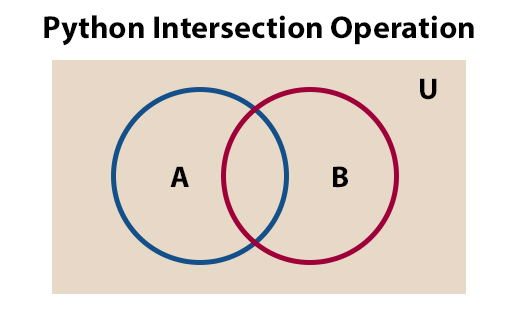
In data science, the intersection operation (denoted as `∩` in set theory) filters records present in multiple datasets. A SQL query like `SELECT FROM table1 INTERSECT SELECT FROM table2` returns only rows common to both, eliminating duplicates. This is critical in analytics, where intersecting datasets—say, customer purchase history with demographic data—reveals targeted marketing opportunities. The challenge lies in efficiency: a poorly optimized intersection (e.g., a Cartesian product) can overwhelm systems, while a well-designed one (e.g., indexed joins) accelerates insights. Similarly, in social theory, intersectionality operates as a framework for analysis, not a fixed model. Crenshaw’s work emphasizes that oppression isn’t additive (race + gender = total oppression) but multiplicative—systems intersect in ways that create unique experiences for marginalized groups.
Key Benefits and Crucial Impact
Intersections are the unseen infrastructure of modern life. In cities, they enable mobility, commerce, and social interaction; in data, they drive decision-making; in theory, they expose systemic biases. Yet their impact isn’t neutral. A well-designed intersection can reduce congestion by 30%, as seen in Barcelona’s superblocks, where pedestrian zones cut traffic deaths. In tech, intersecting datasets can improve fraud detection by 40% by identifying anomalies across multiple sources. Even in activism, the concept of intersectionality has reshaped movements, from #MeToo’s focus on racialized women to climate justice’s critique of environmental racism. The power of what is a intersection lies in its ability to reveal what’s hidden when elements are isolated.The downside? Poorly managed intersections create chaos. Traffic jams cost the U.S. economy $160 billion annually; misaligned data intersections lead to flawed AI models; and ignoring social intersections perpetuates inequality. The quote from urbanist Jane Jacobs captures this tension:
"Cities have the capability of providing something for everybody, only because, and only when, they are created by everybody."Jacobs’ insight applies to all intersections: their success depends on inclusive design—whether that means accessible crosswalks, unbiased algorithms, or policies that account for overlapping identities.
Major Advantages
Understanding what is a intersection unlocks five key advantages:- Efficiency: Optimized intersections (e.g., smart traffic lights using IoT sensors) reduce delays and fuel consumption by dynamically adjusting to real-time conditions.
- Connectivity: Physical intersections foster community hubs (e.g., Parisian places or Tokyo’s scramble crossings), while digital intersections enable cross-disciplinary innovation (e.g., healthcare data intersecting with genomics).
- Safety: Designs like raised medians or pedestrian refuges cut accident rates by redirecting conflicting flows, while data intersections help predict hazards (e.g., combining weather data with traffic patterns).
- Equity: Intersectionality in policy ensures marginalized groups aren’t overlooked—e.g., designing sidewalks for wheelchair users or algorithms that don’t disproportionately target minority communities.
- Adaptability: Modular intersections (e.g., convertible bike lanes or temporary pop-up markets) allow cities to pivot for events, emergencies, or climate shifts.

Comparative Analysis
Not all intersections are equal. Below is a comparison of four types across domains:| Type | Characteristics and Applications |
|---|---|
| Physical (Urban) | Governed by traffic rules, geometry, and infrastructure. Examples: Roundabouts (low conflict), Signalized intersections (high capacity), Grade separations (high-speed). Weakness: Vulnerable to congestion or pedestrian accidents. |
| Data (SQL/Set Theory) | Operates via queries or set operations. Examples: `INTERSECT` (returns common rows), `JOIN` (combines columns). Weakness: Performance degrades with large datasets without indexing. |
| Theoretical (Intersectionality) | Analyzes overlapping systems of power. Examples: Race + Gender in workplace discrimination, Climate + Poverty in disaster response. Weakness: Requires qualitative nuance; not a fixed model. |
| Network (Graph Theory) | Models connections in graphs (e.g., social networks, transportation maps). Examples: Node intersections in GPS routing, Influence spread in viral marketing. Weakness: Scalability issues in dense networks. |
Future Trends and Innovations
The future of what is a intersection is being reshaped by technology and shifting societal needs. In cities, autonomous vehicles and V2X (vehicle-to-everything) communication will enable intersections to operate without traditional signals, using AI to predict and coordinate movements. Smart intersections—embedded with sensors, cameras, and edge computing—will adapt in real time, prioritizing emergency vehicles or rerouting during events. Meanwhile, "intersectionless" designs, like Sweden’s torslös korsning (conflict-free roundabouts), aim to eliminate left-turn conflicts entirely.In data, the rise of graph databases (e.g., Neo4j) will make intersections more fluid, allowing queries to traverse complex relationships dynamically. Federated learning—where models intersect data from multiple sources without centralizing it—will address privacy concerns. Even intersectionality is evolving: AI tools now analyze how biases intersect in language models, while policy labs use spatial data to map overlapping inequalities. The next decade will likely see intersections become more intelligent (self-optimizing) and inclusive (designed for all users), blurring the line between physical and digital spaces.
Conclusion
What is a intersection is a question with answers as diverse as the fields that study it. From the asphalt of a bustling crossroads to the lines of code in a data pipeline, intersections are the nodes where progress happens—or stalls. Their history reflects humanity’s struggle to balance order and chaos, efficiency and equity. Yet the most compelling aspect of intersections is their potential: to connect, to reveal, and to redefine. As cities grow more congested, data more voluminous, and societies more complex, the intersections we design today will determine the world we inhabit tomorrow.The lesson is clear: whether you’re a planner, a programmer, or a citizen, understanding what is a intersection isn’t just academic—it’s practical. It’s about seeing the world not as isolated parts but as a web of relationships. And in that web, every intersection is a choice: to build barriers or bridges, to ignore overlaps or embrace them.
Comprehensive FAQs
Q: How does a roundabout differ from a traditional intersection in terms of efficiency?
A: Roundabouts reduce conflict points by eliminating left-turn crossings (a major crash risk) and prioritize continuous flow. Studies show they improve capacity by 30–50% at moderate traffic volumes and cut severe accidents by up to 90%. Traditional intersections, however, excel in high-speed scenarios where stopping isn’t feasible, like highways. The choice depends on pedestrian volume, vehicle mix, and local climate (e.g., snowplows struggle with roundabouts).
Q: Can intersectionality be applied outside social sciences?
A: Absolutely. In healthcare, intersectional epidemiology examines how race, gender, and socioeconomic status intersect to affect disease outcomes (e.g., Black women’s higher maternal mortality rates). In tech, algorithmic intersectionality audits AI for biases across multiple axes (e.g., gender in voice recognition + race in facial recognition). Even urban design uses the concept to evaluate how policies affect overlapping communities (e.g., gentrification displacing low-income families of color).
Q: What’s the most common mistake in designing data intersections?
A: Assuming intersections are symmetric. A Cartesian product (all possible combinations) is computationally expensive and often unnecessary. The mistake lies in treating `INTERSECT` as a default operation when a `JOIN` (with conditions) or a `UNION` (merged distinct sets) might suffice. Another pitfall is ignoring data skew—where one dataset dominates, making the intersection trivial or biased. Best practice: profile datasets first to optimize the operation.
Q: How do smart cities use intersections to reduce pollution?
A: Smart intersections employ real-time adjustments: traffic lights sync with bus schedules to reduce idling, prioritize EVs at charging stations, and use air-quality sensors to reroute diesel trucks. Singapore’s Green Link system, for example, coordinates signals to minimize stops, cutting emissions by 10%. Some cities (like Barcelona) also integrate intersections with public transit, ensuring pedestrians and cyclists have priority during rush hours, further reducing car dependency.
Q: Is there a mathematical limit to how many paths can intersect at a single point?
A: In Euclidean geometry, an infinite number of lines can intersect at a single point (e.g., all radii of a circle). However, in practical terms—like road networks—physical constraints limit intersections. A complete graph (where every pair of paths intersects) becomes unmanageable beyond ~10–15 nodes due to combinatorial explosion. Urban planners use hierarchical networks (e.g., highways intersecting local roads) to balance connectivity without chaos. In data, the curse of dimensionality similarly restricts high-degree intersections.
Q: How does intersectionality influence urban planning today?
A: It’s shifting planning from universal designs (e.g., "one-size-fits-all" sidewalks) to contextual equity. For example:
- Transportation: Prioritizing bus rapid transit in neighborhoods with high Black and Latino populations, where car ownership is lower.
- Housing: Zoning laws now account for how displacement affects intersecting groups (e.g., LGBTQ+ seniors in gentrifying areas).
- Green Spaces: Designing parks accessible to people with disabilities and culturally relevant to immigrant communities.
Q: What’s the difference between an intersection and a junction?
A: While often used interchangeably, junction is the broader term for any meeting point (e.g., a river junction, a railway junction), whereas intersection implies a crossing where paths overlap and require negotiation (e.g., roads, datasets). In traffic engineering, a junction might include grade separations (overpasses) where vehicles don’t cross paths, while an intersection always involves potential conflict. Linguistically, intersection carries connotations of interaction—hence its use in social theory.
Leave a Comment
Comments are moderated before appearing. The data you submit is processed according to the Privacy Policy of Surfchex.