How to Install Python: The Definitive Step-by-Step Process

Python’s dominance in programming stems not just from its readability but from how effortlessly it can be installed python on any system. Unlike languages tied to proprietary environments, Python’s open-source nature ensures accessibility—whether you’re deploying it on a Linux server, a Windows desktop, or a macOS laptop. The process, however, varies subtly between platforms, and missteps (like skipping version checks or ignoring PATH configurations) can derail even seasoned developers. Below, we dissect the nuances of setting up Python, from the official installer to alternative methods, while addressing pitfalls that often confuse beginners.
The decision to install Python isn’t merely about acquiring a tool; it’s about unlocking a gateway to automation, data science, and web development. Yet, the installation itself is deceptively simple—until you encounter dependency conflicts, permission errors, or the infamous "Python not recognized" message. These issues trace back to overlooked details: virtual environments, package managers, and system-specific quirks. This guide cuts through the noise, offering a structured approach to installing Python without unnecessary detours.
Before proceeding, clarify your goals. Are you installing Python for scripting, machine learning, or backend development? The answer dictates whether you’ll need additional libraries (NumPy, TensorFlow) or a specific version (Python 3.12 vs. 3.10). Skipping this step often leads to reinstalls or workarounds. Below, we outline the official and alternative methods, their trade-offs, and how to verify a successful installation—ensuring your setup aligns with your project’s demands.
The Complete Overview of Installing Python
The official method for installing Python remains the most reliable for most users. Python’s website provides platform-specific executables that handle dependencies and PATH configurations automatically. However, this approach assumes you’re working in a controlled environment—free from conflicting installations or corporate IT policies that restrict software changes. For developers in shared systems (e.g., university labs or cloud VMs), alternative methods like package managers (apt, yum, brew) or containerized setups (Docker) become essential. Each method carries trade-offs: official installers prioritize simplicity, while package managers offer granular control over versions and dependencies.Beyond the installation itself, the real challenge lies in post-setup validation. A common mistake is assuming Python is ready to use after the installer completes—only to later discover missing libraries or PATH misconfigurations. Tools like `python --version` and `pip list` serve as sanity checks, but they’re just the beginning. For data science workflows, you’ll need to install Python alongside tools like Jupyter Notebook or Conda, which introduce their own dependencies. This guide covers not just the installation but the ecosystem surrounding it, ensuring your setup is production-ready.
Historical Background and Evolution
Python’s origins trace back to 1991, when Guido van Rossum sought to create a language that balanced readability with power. Unlike C or Java, Python eschewed verbose syntax in favor of indentation-based structure, making it instantly accessible. The language’s growth accelerated with the release of Python 2.0 in 2000, which introduced features like list comprehensions and a garbage collector. However, the transition to Python 3.x in 2008—though backward-incompatible—was a turning point. Developers now had a modern, Unicode-ready language, but the shift forced many to install Python 3 explicitly, as older systems defaulted to Python 2.Today, Python’s ecosystem is a patchwork of versions, each serving distinct purposes. Python 3.12, for instance, prioritizes performance and type-hinting improvements, while legacy systems may still rely on Python 2.7 (though its end-of-life in 2020 makes this a risky choice). The decision to install Python thus hinges on compatibility: a web scraper might work on Python 3.8, while a deep-learning project demands the latest release. This versioning complexity is why many developers use tools like pyenv to manage multiple installations simultaneously—a topic we’ll revisit in the advanced configurations section.
Core Mechanisms: How It Works
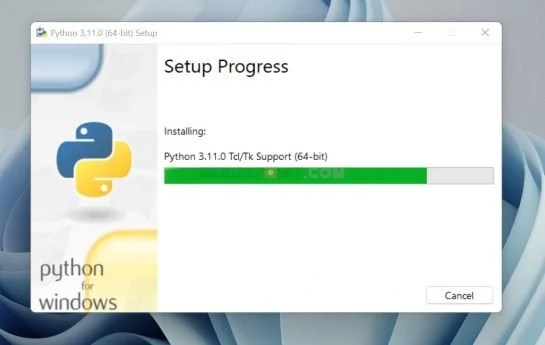
At its core, installing Python involves three critical steps: downloading the interpreter, configuring system paths, and validating the environment. The official installer (e.g., `python-3.12.0-amd64.exe` on Windows) bundles the interpreter, pip (Python’s package manager), and IDLE (a basic IDE). During installation, the user selects options like "Add Python to PATH" and "Install launcher for all users," which determine whether Python becomes globally accessible or requires manual path adjustments. On Unix-like systems, the process is streamlined via package managers (e.g., `sudo apt install python3`), which handle dependencies automatically but may lag behind the latest releases.Table of Contents
- The Complete Overview of Installing Python
- Historical Background and Evolution
- Core Mechanisms: How It Works
- Key Benefits and Crucial Impact
- Major Advantages
- Comparative Analysis
- Future Trends and Innovations
- Conclusion
- Comprehensive FAQs
- Q: Do I need to uninstall old Python versions before installing a new one?
- Q: Why does Python not appear in my system PATH after installation?
- Q: How do I install Python on a system with restricted permissions (e.g., corporate laptop)?
- Q: What’s the difference between Python’s official installer and Anaconda?
- Q: Can I install Python 2.7 in 2024?
- Q: How do I verify my Python installation is correct?
The real magic happens under the hood. Python’s interpreter compiles source code into bytecode, which is then executed by the Python Virtual Machine (PVM). This abstraction allows Python to run on diverse platforms without recompilation—a key reason for its portability. However, this flexibility introduces challenges: libraries compiled for one platform (e.g., Windows) may fail on another (Linux). When installing Python, users must account for these nuances, especially when working with third-party modules like PyTorch or OpenCV, which often require platform-specific builds.
Key Benefits and Crucial Impact
Python’s ubiquity isn’t accidental. Its design philosophy—"There’s only one obvious way to do it"—reduces cognitive overhead, while its extensive standard library eliminates the need for reinventing the wheel. For developers, this translates to faster prototyping and deployment. Data scientists leverage Python’s integration with NumPy and Pandas to handle massive datasets effortlessly, while backend engineers rely on frameworks like Django and FastAPI to build scalable APIs. The language’s versatility extends to automation, cybersecurity, and even embedded systems, thanks to libraries like MicroPython.Yet, the true value of installing Python lies in its ecosystem. Tools like pip, conda, and virtualenv enable reproducible environments, ensuring projects run consistently across machines. This is particularly critical in collaborative settings, where dependencies can vary wildly. Below, we highlight the advantages that make Python the default choice for millions of developers worldwide.
"Python’s success isn’t about being the fastest language—it’s about being the most useful one. Its simplicity allows developers to focus on solving problems, not wrestling with syntax."
— Guido van Rossum, Python’s Creator
Major Advantages
- Cross-Platform Compatibility: Python runs on Windows, macOS, Linux, and even Raspberry Pi, making it ideal for embedded and IoT projects. The same codebase can be deployed across environments without major modifications.
- Rich Standard Library: Modules for file I/O, networking, and multithreading are included out-of-the-box, reducing the need for external dependencies in many use cases.
- Extensive Third-Party Libraries: From AI (TensorFlow) to web scraping (BeautifulSoup), Python’s package ecosystem (PyPI) hosts over 500,000 libraries, covering nearly every domain.
- Strong Community Support: Stack Overflow, GitHub, and official documentation provide solutions to nearly every issue encountered during installation or development.
- Integration Capabilities: Python can interface with C/C++, Java, and .NET, making it a bridge between legacy systems and modern workflows.

Comparative Analysis
While Python dominates, other languages offer competing strengths. Below, we compare Python’s installation and runtime characteristics with Java, JavaScript (Node.js), and Go, focusing on key differentiators.| Criteria | Python | Java |
|---|---|---|
| Installation Complexity | Simple via official installer or package managers. Minimal dependencies for basic use. | Requires JDK installation and environment setup (JAVA_HOME, PATH). Ant/Maven often needed for projects. |
| Runtime Environment | Interpreted (with optional compilation to bytecode). No separate JVM required. | Compiled to bytecode, executed by the JVM. Slower startup but optimized for performance. |
| Package Management | pip/conda for dependencies. Virtualenv for isolation. | Maven/Gradle for dependencies. No built-in virtualization. |
| Learning Curve | Low for beginners (indentation-based syntax). Steeper for advanced concurrency. | Moderate (OOP focus). Requires understanding of JVM and memory management. |
Future Trends and Innovations
Python’s evolution is being driven by two parallel forces: performance enhancements and domain specialization. The language’s interpreter (CPython) is undergoing optimizations like the "faster CPython" initiative, which promises near-C-speed execution for numerical code. Meanwhile, tools like Pyodide (Python in the browser) and WASM-based Python are blurring the lines between frontend and backend development. For data scientists, libraries like PyTorch and JAX are integrating hardware acceleration (GPU/TPU) more tightly, reducing the need for manual CUDA configurations.The rise of AI/ML will further cement Python’s role, but challenges remain. As Python’s popularity grows, so do concerns about its performance and memory usage in large-scale applications. Solutions like Rust-based interpreters (e.g., PyO3) and Just-In-Time (JIT) compilation may redefine how Python is installed python and executed in the future. One thing is certain: the language’s adaptability ensures it will remain relevant, even as newer paradigms emerge.
Conclusion
Installing Python is the first step toward unlocking a world of possibilities, but the real work begins afterward. Whether you’re automating tasks, crunching data, or building APIs, the setup process—though straightforward—demands attention to detail. Ignoring PATH configurations or skipping version checks can lead to hours of debugging, while overlooking virtual environments risks dependency conflicts in collaborative projects.The key takeaway? Treat Python installation as the foundation of your workflow. Use official installers for simplicity, package managers for control, and tools like pyenv for version flexibility. Validate your setup early, and don’t hesitate to consult the community when issues arise. With the right approach, installing Python becomes not just a technical task but the gateway to building scalable, maintainable, and innovative solutions.
Comprehensive FAQs
Q: Do I need to uninstall old Python versions before installing a new one?
A: No, but it’s often safer to do so to avoid PATH conflicts. Use tools like where python (Windows) or which python (Unix) to check existing installations. If multiple versions coexist, use pyenv to manage them without conflicts.
Q: Why does Python not appear in my system PATH after installation?
A: This typically happens if you unchecked "Add Python to PATH" during installation. Reinstall Python and ensure this option is selected. On Unix systems, manually add /usr/local/bin (or the installation directory) to your PATH environment variable.
Q: How do I install Python on a system with restricted permissions (e.g., corporate laptop)?
A: Use a user-level installation (e.g., python -m pip install --user package) or request IT to whitelist the official installer. Alternatively, use Docker or a virtual machine to isolate Python environments.
Q: What’s the difference between Python’s official installer and Anaconda?
A: The official installer provides a lightweight Python environment with pip, while Anaconda bundles Python with 1,500+ preinstalled data science libraries (NumPy, SciPy, etc.). Use Anaconda if you’re working in data science; otherwise, the official installer is sufficient.
Q: Can I install Python 2.7 in 2024?
A: Technically yes, but it’s strongly discouraged. Python 2.7 reached end-of-life in 2020, and modern libraries no longer support it. Use Python 3.8+ for new projects to ensure compatibility and security updates.
Q: How do I verify my Python installation is correct?
A: Run python --version to check the Python version. Test pip with pip --version, then install a dummy package (pip install requests) and verify it works. For data science, install Jupyter (pip install jupyter) and launch it with jupyter notebook.
Leave a Comment
Comments are moderated before appearing. The data you submit is processed according to the Privacy Policy of Surfchex.