How Python’s If Statement Works: Logic, Mastery, and Hidden Power

Python’s if statement is where code transforms from static instructions into dynamic intelligence. Without it, programs would execute the same path every time—no branching, no adaptability. The if statement in Python isn’t just a syntax feature; it’s the decision engine that powers everything from simple user input validation to complex AI workflows. Developers rely on it to filter data, handle edge cases, and create responsive applications. Yet, its simplicity often masks its depth—how it interacts with type systems, boolean logic, and even Python’s object model.
The elegance of Python’s if statement lies in its minimalism. Unlike languages that require explicit boolean checks (e.g., `if (x == true)`), Python’s syntax reads almost like natural language: `if x:`. This design choice reflects Python’s philosophy—prioritize readability over ceremony. But beneath this simplicity is a robust mechanism that supports nested conditions, ternary operators, and even context managers. Mastering it means understanding not just the syntax, but how Python evaluates truthiness, handles exceptions, and optimizes execution.
What makes the if statement truly powerful is its versatility. It’s used in data pipelines to filter records, in web frameworks to route requests, and in game engines to trigger events. Yet, misuse can lead to spaghetti code or performance bottlenecks. The key is recognizing when to use it, when to refactor into functions, and how to leverage Python’s advanced features like `elif` chains or dictionary dispatch.
The Complete Overview of Python’s If Statement
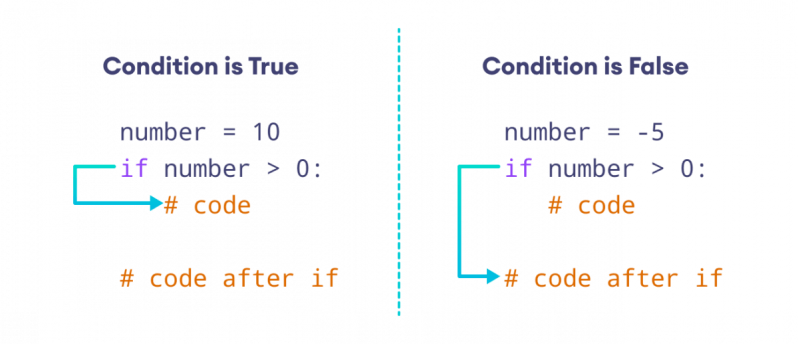
Python’s if statement is the cornerstone of conditional logic, allowing programs to execute different code blocks based on runtime conditions. At its core, it evaluates an expression and, if the result is "truthy," proceeds with the indented block beneath it. This mechanism is deceptively simple but underpins nearly every non-trivial Python program. Whether you’re checking user input, validating data, or orchestrating workflows, the if statement provides the branching logic essential for dynamic behavior.The syntax is intentionally clean: `if condition:`, followed by a colon and an indented suite. Python’s reliance on indentation (rather than braces) enforces clarity and reduces syntactic noise. However, this simplicity can be misleading—understanding how Python evaluates conditions (including truthiness rules for objects like lists or dictionaries) is critical for writing reliable code. For example, an empty list evaluates to `False`, while a non-empty one is `True`, enabling concise checks like `if my_list:`.
Historical Background and Evolution
The if statement in Python traces its lineage to BASIC and C, but Python’s implementation reflects Guido van Rossum’s emphasis on readability. Early versions of Python (pre-1.0) used C-style syntax (`if (condition) { ... }`), but by Python 1.0 (1994), the language adopted indentation-based blocks—a radical departure that would later become a defining feature. This change wasn’t just aesthetic; it forced developers to write structured, linear code, reducing errors from mismatched braces.Python’s truthiness model also evolved to accommodate its dynamic typing. Unlike statically typed languages where conditions must explicitly return `True` or `False`, Python’s if statement accepts any object, deferring to its `__bool__()` or `__len__()` methods. This flexibility aligns with Python’s philosophy of "duck typing," where an object’s behavior (not its type) determines its truthiness. For instance, `if user_input:` works because Python checks if the string is non-empty, avoiding the need for `if len(user_input) > 0:`.
Core Mechanisms: How It Works
Under the hood, Python’s if statement is a control flow construct that leverages the Python Data Model. When the interpreter encounters `if x:`, it calls `x.__bool__()`. If no such method exists, it falls back to `x.__len__()`—meaning objects with a length (like lists or strings) are evaluated based on whether they’re empty. This dual-layer approach explains why `if []:` evaluates to `False` (length 0) while `if [0]:` evaluates to `True` (non-empty).Table of Contents
- The Complete Overview of Python’s If Statement
- Historical Background and Evolution
- Core Mechanisms: How It Works
- Key Benefits and Crucial Impact
- Major Advantages
- Comparative Analysis
- Future Trends and Innovations
- Conclusion
- Comprehensive FAQs
- Q: Can Python’s if statement evaluate non-boolean expressions?
- Q: How does Python’s if statement handle exceptions?
- Q: What’s the difference between `if x:` and `if x == True:`?
- Q: Can I use if statements in list comprehensions?
- Q: How does Python optimize if statements ?
- Q: What’s the best practice for long if-elif-else chains?
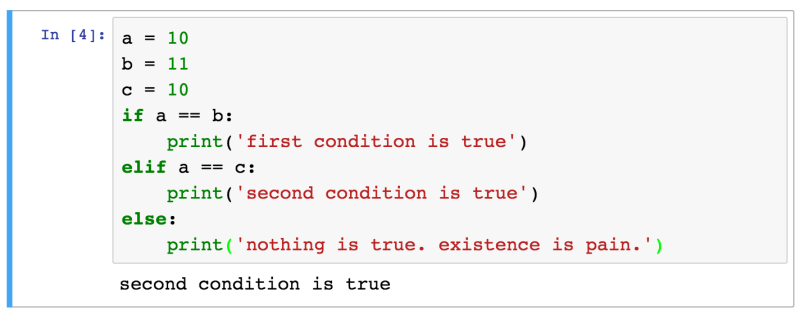
The if statement also integrates with Python’s exception handling. For example, `if hasattr(obj, 'method'):` avoids `AttributeError` by checking existence first. This interplay between conditionals and error handling is a hallmark of Pythonic code—using if statements to preemptively manage edge cases rather than relying on try-catch blocks for control flow. Additionally, Python’s `elif` (else-if) and `else` clauses extend the if statement into a multi-way branch, enabling complex decision trees without nested conditions.
Key Benefits and Crucial Impact
The if statement is more than syntax—it’s a tool for expressing intent clearly. By reducing boilerplate (e.g., no parentheses around conditions), Python’s design encourages developers to focus on logic rather than syntax. This aligns with the Zen of Python, where "explicit is better than implicit" and "simple is better than complex." The impact is measurable: studies show Python code with well-structured if statements is easier to debug and maintain, especially in collaborative environments.Beyond readability, the if statement enables efficient data processing. For example, filtering a list of users based on age can be done concisely with a list comprehension and an if statement inside it: `[user for user in users if user.age > 18]`. This idiom combines conditionals with iteration, demonstrating how Python’s features interact to solve problems elegantly. The if statement also plays a pivotal role in functional programming patterns, such as lazy evaluation with generators.
"The if statement is where Python’s power meets its simplicity. It’s the bridge between static code and dynamic behavior—without it, programs would be rigid and predictable." — Guido van Rossum (Python Creator)
Major Advantages
- Readability: Python’s indentation and lack of braces make if statements visually distinct and easy to follow, reducing cognitive load.
- Flexible Truthiness: Works with any object, not just booleans, thanks to `__bool__()` and `__len__()` methods.
- Integration with Other Features: Combines seamlessly with list comprehensions, dictionary dispatch, and context managers.
- Performance Optimizations: Python’s bytecode compiler can short-circuit if statements (e.g., `if x and y:` stops evaluating after `x` is `False`).
- Error Prevention: Enables defensive programming by checking conditions before operations that might raise exceptions.
Comparative Analysis
| Python’s If Statement | C/Java-Style If |
|---|---|
|
|
|
|
|
|
Future Trends and Innovations
As Python evolves, the if statement will continue to adapt to new paradigms. Type hints (e.g., `if isinstance(x, str):`) are becoming more prevalent, allowing static analyzers to catch logical errors early. Additionally, the rise of pattern matching (introduced in Python 3.10 via `match-case`) may reduce reliance on nested if-elif-else chains for complex conditions. Future versions might also optimize if statements for JIT compilation (e.g., in PyPy), further improving performance-critical applications.Another trend is the integration of if statements with asynchronous programming. While Python’s `async`/`await` doesn’t directly use conditionals, libraries like `aiohttp` rely on if statements to handle HTTP responses dynamically. As Python’s concurrency model matures, if statements will play a key role in managing state transitions in async workflows.
Conclusion
Python’s if statement is a testament to the language’s design philosophy: powerful yet simple. Its ability to handle truthy/falsy values, integrate with comprehensions, and enable clean control flow makes it indispensable. For beginners, it’s the first step into writing dynamic programs; for experts, it’s a tool for crafting elegant solutions. The key to mastery isn’t memorizing syntax but understanding how to wield it—whether to filter data, validate inputs, or orchestrate complex logic.As Python grows, the if statement will remain central, evolving alongside features like pattern matching and type hints. Its simplicity ensures it stays accessible, while its flexibility ensures it remains relevant. For developers, the lesson is clear: the if statement isn’t just a feature—it’s the foundation of Pythonic decision-making.
Comprehensive FAQs
Q: Can Python’s if statement evaluate non-boolean expressions?
A: Yes. Python’s if statement uses truthiness rules: objects with `__bool__()` or `__len__()` methods are evaluated based on their behavior. For example, `if []:` is `False`, but `if [0]:` is `True`. This is called "duck typing" in conditions.
Q: How does Python’s if statement handle exceptions?
A: While the if statement itself doesn’t catch exceptions, it can prevent them by checking conditions first. For example, `if hasattr(obj, 'method'): obj.method()` avoids `AttributeError`. This is called "defensive programming."
Q: What’s the difference between `if x:` and `if x == True:`?
A: `if x:` checks for truthiness (e.g., non-empty strings, non-zero numbers), while `if x == True:` explicitly checks for the boolean `True`. The former is more Pythonic and flexible, but the latter is useful for strict boolean logic.
Q: Can I use if statements in list comprehensions?
A: Absolutely. For example, `[x for x in data if x > 10]` filters items based on a condition. This combines iteration and conditional logic concisely, a hallmark of Pythonic code.
Q: How does Python optimize if statements?
A: Python’s bytecode compiler short-circuits if statements (e.g., `if x and y:` stops evaluating after `x` is `False`). Additionally, tools like PyPy use JIT compilation to optimize hot paths, including conditional logic.
Q: What’s the best practice for long if-elif-else chains?
A: Refactor into a dictionary dispatch (e.g., `dispatch = {condition1: func1, condition2: func2}; dispatch.get(condition, default)()`) or use pattern matching (`match-case`) in Python 3.10+. This improves readability and maintainability.
Leave a Comment
Comments are moderated before appearing. The data you submit is processed according to the Privacy Policy of Surfchex.