How Python Data Structures Shape Modern Software Design

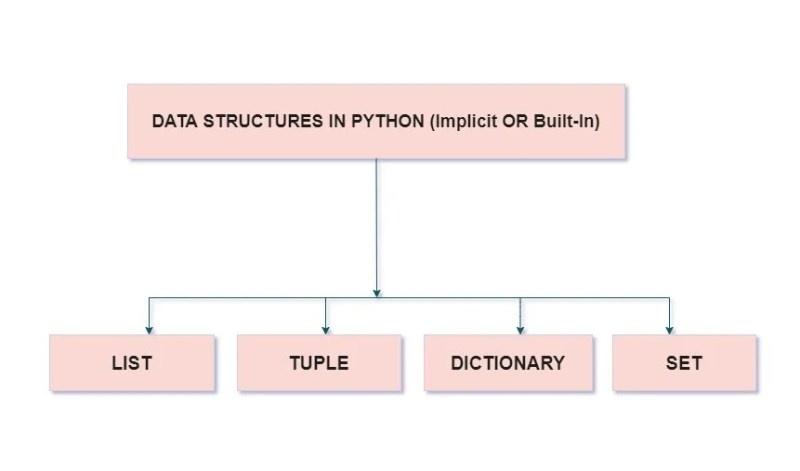
Python’s elegance lies in its python data structures, a cornerstone that distinguishes it from other languages. These structures—lists, tuples, dictionaries, and sets—aren’t just syntactic sugar; they’re the backbone of algorithms, memory management, and system scalability. Whether you’re processing a dataset of millions of records or building a high-frequency trading system, the choice of python data structures dictates speed, memory usage, and even code maintainability. Their design philosophy balances simplicity with power, allowing developers to abstract complexity while retaining control over performance-critical operations.
The efficiency of python data structures stems from their underlying implementation. Lists, for instance, leverage dynamic arrays with amortized O(1) append operations, while dictionaries use hash tables to achieve average-case O(1) lookups. These optimizations aren’t accidental—they’re the result of decades of refinement, where Python’s global interpreter lock (GIL) and memory model were carefully considered. The trade-offs between mutability, immutability, and thread safety further illustrate how these structures solve specific problems without unnecessary overhead.
Yet, the true value of python data structures transcends technical specifications. They enable developers to express intent clearly—whether through the ordered iteration of a list or the associative lookup of a dictionary. This clarity reduces cognitive load, making Python a favorite for both beginners and experts. But mastering them requires more than memorization; it demands an understanding of their trade-offs, edge cases, and real-world applications.
The Complete Overview of Python Data Structures
At their core, python data structures are containers that organize and manipulate data efficiently. They fall into two broad categories: sequence types (ordered, indexable) and mapping/collection types (unordered, key-value or membership-based). Lists and tuples exemplify sequences, where position matters, while dictionaries and sets handle associations or uniqueness. This duality isn’t arbitrary—it reflects Python’s design principle of explicit over implicit, ensuring developers choose the right tool for the job.The distinction between mutable (lists, dictionaries) and immutable (tuples, frozensets) structures further refines their use cases. Mutable structures allow in-place modifications, ideal for dynamic data, while immutable ones guarantee thread safety and hashability, critical for keys in dictionaries or elements in sets. This dichotomy isn’t just theoretical; it directly impacts performance. For example, a tuple’s immutability enables it to be used as a dictionary key, whereas a list cannot.
Historical Background and Evolution
The evolution of python data structures mirrors Python’s own trajectory. Guido van Rossum’s original design in the late 1980s prioritized readability and simplicity, but early implementations lacked the optimizations seen today. Lists, for instance, began as linked lists before transitioning to dynamic arrays in Python 2.3 (2001), a shift that drastically improved performance for large datasets. This change wasn’t just technical—it reflected a broader trend in Python’s development: balancing ease of use with under-the-hood efficiency.Dictionaries underwent a similar transformation. Early versions used open addressing for collision resolution, but Python 3.6 introduced a compact dictionary implementation with a more efficient memory layout. The introduction of dict comprehension (Python 3.9) further streamlined operations, reducing boilerplate while maintaining clarity. These iterations highlight how python data structures adapt to modern demands—whether for data science, web frameworks, or embedded systems—without sacrificing Python’s hallmark simplicity.
Core Mechanisms: How It Works
Understanding python data structures requires peeling back the layers of abstraction. Lists, for example, are implemented as arrays of pointers to Python objects, with a preallocated capacity that grows geometrically (typically doubling) to amortize the cost of resizing. This approach ensures that appending elements remains O(1) on average, though occasional resizes introduce O(n) overhead. Dictionaries, on the other hand, use a hash table with open addressing, where keys are hashed to indices and collisions are resolved via probing.Table of Contents
- The Complete Overview of Python Data Structures
- Historical Background and Evolution
- Core Mechanisms: How It Works
- Key Benefits and Crucial Impact
- Major Advantages
- Comparative Analysis
- Future Trends and Innovations
- Conclusion
- Comprehensive FAQs
- Q: Why can’t I use a list as a dictionary key?
- Q: How do I optimize memory usage for large datasets in Python?
- Q: What’s the difference between `set` and `frozenset`?
- Q: Can I nest Python data structures?
- Q: How do I choose between a list and a tuple?
The mechanics extend to memory management. Python’s reference counting system means that mutable structures like lists hold strong references to their elements, while immutable structures like tuples may be interned (reused) to save memory. This interplay between mutability and memory efficiency is a defining feature of python data structures, influencing everything from garbage collection to interoperability with C extensions.
Key Benefits and Crucial Impact
The advantages of python data structures are both tangible and strategic. They reduce development time by providing built-in methods for common operations—sorting, searching, or aggregating—without reinventing the wheel. This abstraction allows developers to focus on business logic rather than low-level implementation, a critical factor in Python’s adoption across industries from finance to AI. Moreover, their consistency across the language ecosystem ensures compatibility with libraries like NumPy or Pandas, where optimized data structures underpin high-performance computing.Beyond efficiency, python data structures foster collaboration. Their intuitive syntax (e.g., `dict.keys()` or `list.pop()`) creates a shared vocabulary among developers, reducing miscommunication in team settings. This clarity extends to debugging: a well-chosen structure can make the flow of data explicit, simplifying error tracing. The impact isn’t limited to codebases—it permeates workflows, from prototyping to deployment.
"Python’s data structures are like Swiss Army knives: each tool has a specific purpose, but together they handle every problem you’re likely to encounter." — David Beazley, Python Core Developer
Major Advantages
- Performance Optimization: Built-in structures like `collections.deque` (double-ended queue) offer O(1) pops from both ends, ideal for breadth-first searches or real-time data streams.
- Memory Efficiency: Structures like `array.array` or `typing.NamedTuple` reduce memory overhead for homogeneous or fixed-format data, critical in embedded systems.
- Functional Programming Support: Immutable structures (tuples, frozensets) enable pure functions and thread-safe operations, aligning with modern concurrency models.
- Interoperability: The `ctypes` or `CFFI` modules allow seamless integration with C libraries, where data structures must match binary layouts precisely.
- Extensibility: Custom classes can subclass built-in structures (e.g., `collections.UserList`) to add domain-specific methods without sacrificing performance.

Comparative Analysis
| Structure | Use Case |
|---|---|
| List | Ordered, mutable collections (e.g., dynamic arrays, stacks). Use when insertion/deletion at ends is frequent. |
| Tuple | Immutable sequences (e.g., coordinates, dictionary keys). Faster iteration and safer in concurrent contexts. |
| Dictionary | Key-value mappings (e.g., JSON parsing, caching). O(1) lookups make it ideal for associative data. |
| Set | Unique elements with fast membership testing (e.g., deduplication, set operations). Unordered by design. |
Future Trends and Innovations
The future of python data structures is shaped by two forces: performance demands and language evolution. As Python adopts type hints and static analysis tools (e.g., `mypy`), structures like `NamedTuple` and `dataclass` will gain prominence, bridging dynamic and static typing paradigms. Meanwhile, projects like Python’s PEPs for memory optimization (e.g., PEP 593 for positional-only parameters) hint at deeper integrations with hardware acceleration, such as GPU-optimized arrays.Another trend is the rise of metaclasses for structures, where developers define custom containers with runtime-generated methods. Libraries like `pydantic` already demonstrate this with data validation layers atop dictionaries. As Python embraces pattern matching (PEP 634), structures will likely support more expressive syntax for unpacking and transformation, further blurring the line between data and logic.
Conclusion
Python’s data structures are more than syntactic conveniences—they’re a testament to the language’s philosophy of practicality. Their design reflects a careful balance between theoretical elegance and real-world constraints, from the GIL to hardware limitations. As Python continues to evolve, these structures will remain central, adapting to new challenges while preserving the principles that made them indispensable.For developers, the takeaway is clear: python data structures are not just tools but partners in problem-solving. Whether you’re optimizing a machine learning pipeline or architecting a microservice, choosing the right structure isn’t just about syntax—it’s about aligning your code with the inherent properties of the data itself.
Comprehensive FAQs
Q: Why can’t I use a list as a dictionary key?
A: Lists are mutable, and dictionary keys must be immutable and hashable. Since a list’s contents can change, its hash value isn’t fixed, violating this requirement. Use a tuple instead, as its immutability guarantees a consistent hash.
Q: How do I optimize memory usage for large datasets in Python?
A: For homogeneous numeric data, use `array.array` or NumPy arrays. For mixed types, consider `dataclasses` with `__slots__` to reduce attribute overhead. Libraries like `pandas` also offer memory-efficient alternatives for tabular data.
Q: What’s the difference between `set` and `frozenset`?
A: A `set` is mutable and unordered, while a `frozenset` is immutable and hashable. The latter can be used as a dictionary key or element in another set, whereas the former cannot.
Q: Can I nest Python data structures?
A: Yes, nesting is common. For example, a list of dictionaries (`[{"key": "value"}, ...]`) or a dictionary of sets (`{"tags": {"python", "data"}}`). However, ensure the nested structures align with your use case—e.g., avoid mutable defaults in nested lists.
Q: How do I choose between a list and a tuple?
A: Use a list when you need to modify the collection (add/remove elements). Use a tuple when the data is static (e.g., constants, keys) or thread safety is required. Tuples are also slightly faster for iteration and packing/unpacking.
Leave a Comment
Comments are moderated before appearing. The data you submit is processed according to the Privacy Policy of Surfchex.