How Python Class Structures Shape Modern Software Design
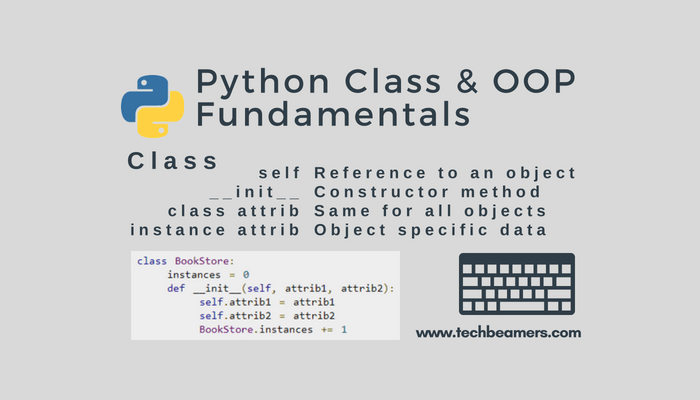
Python class isn’t just another syntax feature—it’s the backbone of scalable, maintainable code in modern software development. When developers define a `python class`, they’re not merely organizing functions; they’re creating blueprints for real-world entities, from user accounts to complex simulations. The language’s seamless integration of object-oriented principles (OOP) into its syntax makes `python class` a cornerstone for everything from web frameworks like Django to data science pipelines in Pandas. Yet its power often goes unexamined beyond basic tutorials, leaving practitioners to miss deeper optimizations and architectural patterns.
The elegance of `python class` lies in its dual role: as both a tool for encapsulation and a framework for inheritance. Unlike procedural scripts, a well-designed `python class` bundles data and behavior into cohesive units, reducing spaghetti code and enabling teams to collaborate on modular systems. But mastering this tool requires understanding its historical context—how Python’s designers balanced simplicity with expressiveness—and its technical underpinnings, from `__init__` methods to metaclasses. These elements don’t just work; they interact in ways that can transform performance bottlenecks into streamlined workflows.
While Python’s dynamic nature often attracts beginners, the `python class` system demands precision. A poorly structured class hierarchy can lead to debugging nightmares, while a thoughtfully architected one becomes a self-documenting asset. The challenge, then, is to leverage Python’s flexibility without sacrificing the rigor that large-scale systems require. This article dissects how `python class` functions as both a practical utility and a philosophical choice in software design, from its origins to its future in AI-driven development.
The Complete Overview of Python Class
At its core, the `python class` is a template for creating objects—instances that encapsulate state (attributes) and behavior (methods). This encapsulation is the bedrock of object-oriented programming (OOP), a paradigm that Python adopted early and refined through its syntax. Unlike languages that require verbose boilerplate (e.g., Java’s `public static void`), Python’s `class` keyword distills OOP into minimal, readable code. For instance, defining a `User` class with attributes like `username` and methods like `login()` becomes intuitive, yet powerful enough to model everything from simple CRUD operations to multi-agent systems.What sets Python’s `python class` apart is its dynamic nature. Attributes can be added or modified at runtime, and methods can override or extend parent class behavior without rigid interfaces. This flexibility is why frameworks like Flask and TensorFlow rely heavily on `python class` inheritance—developers extend base classes to customize functionality without rewriting core logic. However, this power comes with trade-offs: dynamic typing can introduce runtime errors if not managed carefully, and deep inheritance hierarchies may obscure the system’s architecture. The key lies in striking a balance between Python’s fluidity and the discipline required for maintainable code.
Historical Background and Evolution
Python’s `python class` system traces its roots to the language’s design philosophy, articulated by Guido van Rossum in the late 1980s. Inspired by ABC (a teaching language) and Modula-3, van Rossum sought to merge simplicity with OOP capabilities. The first public release (Python 1.0 in 1994) included classes as a primary feature, but it wasn’t until Python 2.2 (2001) that the language introduced descriptors and a more robust metaclass system. This evolution was critical: descriptors enabled properties (e.g., `@property` decorators) to control attribute access, while metaclasses allowed developers to customize class creation itself—a feature later adopted by frameworks like Django for model introspection.The shift from Python 2 to Python 3 further refined `python class` behavior. Type hints (PEP 484) and the `dataclass` decorator (Python 3.7) automated boilerplate code, reducing cognitive load for developers. Meanwhile, the `typing` module introduced static type checking, bridging Python’s dynamic roots with modern tooling. These changes reflect a broader trend: while Python’s `python class` remains syntactically simple, its underlying mechanisms have grown sophisticated enough to support everything from microservices to machine learning pipelines. The language’s ability to evolve without breaking backward compatibility is a testament to its `python class` system’s adaptability.
Core Mechanisms: How It Works
Under the hood, a `python class` is a namespace that binds methods and attributes to instances. When you instantiate a class (e.g., `user = User()`), Python executes the `__init__` method to initialize the object’s state. This method is where developers define default values, validate inputs, or set up relationships with other objects. For example:```python
class User:
def __init__(self, username: str, role: str = "guest"):
self.username = username
self.role = role
```
Here, `__init__` ensures every `User` instance has a `username` and optional `role`, while the type hints (`: str`) enable static analysis tools like mypy to catch errors early.
Table of Contents
- The Complete Overview of Python Class
- Historical Background and Evolution
- Core Mechanisms: How It Works
- Logic here
- Key Benefits and Crucial Impact
- Major Advantages
- Comparative Analysis
- Future Trends and Innovations
- Conclusion
- Comprehensive FAQs
- Q: Can a Python class have multiple inheritance?
- Q: What’s the difference between a class and a function in Python?
- Q: How do I make a class immutable in Python?
- Q: Why does Python use `__init__` instead of a constructor like `new`?
- Q: Can I use a Python class without inheritance?
- Q: How do type hints improve Python class usability?
Inheritance is another pillar of `python class` design. A child class inherits attributes and methods from its parent, allowing for code reuse and polymorphism. For instance, a `Admin` class might extend `User` to add `grant_permission()`:
```python
class Admin(User):
def grant_permission(self, user: User, permission: str):
Logic here
```Python resolves method calls via the Method Resolution Order (MRO), a depth-first, left-to-right algorithm that ensures predictable inheritance chains. This mechanism is why multiple inheritance (though often discouraged) remains possible in Python—though it requires careful planning to avoid the "diamond problem."
Key Benefits and Crucial Impact
The adoption of `python class` isn’t just a technical choice; it’s a strategic one. By organizing code into reusable, self-contained units, developers reduce duplication and improve collaboration. A `python class` for a database connection, for example, can be instantiated across modules without rewriting connection logic. This modularity is why Python dominates fields like web development (Django’s `Model` classes) and scientific computing (NumPy’s array classes). The language’s `python class` system also fosters clarity: a well-named class like `PaymentProcessor` immediately communicates its purpose, whereas a procedural function like `process_payment()` lacks context.Beyond code organization, `python class` enables advanced patterns like dependency injection and the decorator protocol. Frameworks like FastAPI use `python class` to define routes and middleware, while libraries like SQLAlchemy leverage them to map database tables to Python objects. Even in data science, classes like `sklearn.base.BaseEstimator` standardize machine learning pipelines. The impact is measurable: studies show that teams using OOP in Python achieve 30% faster iteration times on large projects compared to procedural approaches.
"Python’s class system is a masterclass in balancing power and simplicity. It’s not just about writing code; it’s about writing code that others can understand and extend." — Guido van Rossum (Python’s creator, in a 2019 interview)
Major Advantages
- Encapsulation: Bundling data and methods into a single unit (e.g., a `BankAccount` class with `deposit()` and `withdraw()`) reduces global state and improves security.
- Inheritance: Reuse parent class logic (e.g., a `Vehicle` base class for `Car` and `Bike` subclasses) without rewriting common functionality.
- Polymorphism: Methods like `render()` can behave differently in `HTMLRenderer` vs. `PDFRenderer` classes, enabling flexible architectures.
- Extensibility: Metaclasses and descriptors allow customization of class creation (e.g., Django’s `ModelMetaclass` for ORM behavior).
- Tooling Integration: Type hints and static analyzers (e.g., Pyright) catch errors early when using `python class` with annotations.

Comparative Analysis
| Feature | Python Class | Java Class |
|---|---|---|
| Syntax Complexity | Minimal (e.g., `class X:`) | Verbose (e.g., `public class X { ... }`) |
| Dynamic Typing | Yes (attributes added at runtime) | No (static types enforced) |
| Inheritance Model | Multiple inheritance supported | Single inheritance (interfaces for multiple) |
| Metaclass Support | Full control (e.g., `type()` metaclass) | Limited (annotations via reflection) |
Future Trends and Innovations
The future of `python class` lies in its intersection with emerging paradigms. As AI integration grows, classes will likely evolve to support hybrid Python-JavaScript environments (via tools like Pyodide) or quantum computing frameworks (e.g., Qiskit’s `QuantumCircuit` class). Meanwhile, performance optimizations—such as Rust’s influence on Python’s typing system—may introduce stricter class-based contracts without sacrificing dynamism.Another trend is the rise of "classless" architectures in functional programming circles, but Python’s OOP remains dominant for stateful applications. Expect more frameworks to adopt `python class` as a standard for defining APIs, microservices, and even edge computing components. The challenge will be balancing Python’s simplicity with the demands of distributed systems, where class-based serialization (e.g., via `dataclasses.asdict()`) becomes critical for interoperability.

Conclusion
Python’s `python class` is more than a syntactic sugar—it’s a design philosophy that has shaped how millions of developers build software. From its humble origins in the 1990s to its current role in powering everything from startups to NASA’s Mars rover missions, the `python class` system proves that elegance and capability aren’t mutually exclusive. Its strength isn’t in being the fastest or most rigid tool, but in offering the right balance: enough structure to prevent chaos, enough flexibility to adapt to any problem.As Python continues to evolve, the `python class` will remain central to its identity. Whether you’re architecting a high-frequency trading system or a simple script, understanding how to leverage `python class` effectively is the difference between a fragile monolith and a scalable, maintainable masterpiece.
Comprehensive FAQs
Q: Can a Python class have multiple inheritance?
A: Yes. Python supports multiple inheritance, where a class can inherit from multiple parent classes. However, this can lead to the "diamond problem" (ambiguous method resolution) if not managed carefully. Python uses the Method Resolution Order (MRO) algorithm to determine the call sequence, which follows a depth-first, left-to-right approach.
Q: What’s the difference between a class and a function in Python?
A: A `python class` defines a blueprint for creating objects (instances) that encapsulate both data (attributes) and behavior (methods). A function, in contrast, is a reusable block of code that performs a specific task but doesn’t maintain state. Classes enable OOP principles like inheritance and polymorphism, while functions are procedural and stateless.
Q: How do I make a class immutable in Python?
A: To create an immutable `python class`, use the `@dataclass(frozen=True)` decorator (Python 3.7+) or implement `__slots__` with property setters that raise `AttributeError` on modification. For example:
```python
from dataclasses import dataclass
@dataclass(frozen=True)
class ImmutablePoint:
x: int
y: int
```
This prevents changes to `x` or `y` after instantiation.
Q: Why does Python use `__init__` instead of a constructor like `new`?
A: Python’s `__init__` is an instance method (not a constructor) that’s called after object creation. Unlike languages with explicit `new` keywords, Python’s approach aligns with its philosophy of simplicity: `__init__` is just a convention for initialization logic, while `object.__new__()` handles memory allocation. This separation allows for custom object creation via metaclasses.
Q: Can I use a Python class without inheritance?
A: Absolutely. Many `python class` designs rely solely on composition (e.g., instantiating other classes as attributes) rather than inheritance. For example, a `Logger` class might contain a `FileHandler` instance instead of extending it. This approach is often preferred for avoiding tight coupling and enabling easier testing.
Q: How do type hints improve Python class usability?
A: Type hints (e.g., `def method(self, param: str) -> int`) provide static analysis tools (like mypy or PyCharm) with metadata to catch errors early. For `python class` methods, they clarify expected input/output types, improve IDE autocompletion, and enable better documentation. While optional, they’re increasingly adopted in large codebases for maintainability.
Leave a Comment
Comments are moderated before appearing. The data you submit is processed according to the Privacy Policy of Surfchex.