Python Lists: The Backbone of Data Handling in Modern Programming

Python’s lists are more than just containers—they are the unsung architects of dynamic data manipulation in one of the world’s most versatile programming languages. Unlike rigid arrays in other languages, Python lists adapt seamlessly to growth, shrinking, or restructuring, making them the default choice for developers handling variable datasets. Their flexibility extends beyond basic storage; they underpin complex algorithms, machine learning pipelines, and even real-time data processing systems. Yet, beneath their intuitive surface lies a sophisticated architecture that balances speed, memory efficiency, and readability—qualities that have cemented their dominance in both academic and industrial applications.
The elegance of Python lists lies in their simplicity. A single line of code—`my_list = [1, "apple", 3.14]`—can encapsulate heterogeneous data, a feature absent in statically typed languages. This versatility is not merely a convenience but a strategic advantage: developers can prototype solutions rapidly without premature optimization. However, this power comes with nuances. Under the hood, Python lists are implemented as dynamic arrays, a trade-off between contiguous memory allocation (for performance) and occasional resizing overhead. The trade-off is deliberate, as it aligns with Python’s philosophy of prioritizing developer productivity over micro-optimizations.
While Python lists are ubiquitous, their behavior under the hood often surprises even experienced programmers. For instance, slicing (`list[1:4]`) creates a shallow copy, not a new list, which can lead to unintended side effects in nested structures. Similarly, the `append()` method operates in amortized O(1) time, but its internal mechanics—including memory pre-allocation—are rarely discussed in introductory tutorials. These subtleties are where Python lists reveal their true depth, demanding a deeper understanding to harness their full potential.
The Complete Overview of Python Lists
Python lists are the cornerstone of Python’s data-handling ecosystem, offering a blend of functionality and performance that rivals specialized data structures in other languages. They support indexing, slicing, concatenation, and nested structures, all while maintaining a clean, readable syntax. This duality—simplicity for beginners and sophistication for experts—explains their ubiquity in everything from scripting to large-scale applications. However, their true power emerges when combined with Python’s rich standard library, where lists serve as inputs for functions like `map()`, `filter()`, and even as arguments in list comprehensions, a feature that revolutionized Python’s expressiveness.The design of Python lists reflects Python’s core principles: readability, maintainability, and pragmatism. Unlike languages that enforce strict typing or manual memory management, Python lists abstract away low-level details while retaining high performance. For example, iterating over a list with `for item in my_list` is not just syntactically clean but also optimized under the hood, leveraging Python’s iterator protocol. This balance between abstraction and performance is what makes Python lists indispensable in domains ranging from web development to scientific computing.
Historical Background and Evolution
The concept of dynamic arrays—what Python lists are built upon—predates Python itself. Early implementations in languages like Lisp and Smalltalk laid the groundwork for mutable, resizable collections. However, Python’s approach, introduced in the late 1980s by Guido van Rossum, distinguished itself by combining dynamic resizing with a clean syntax. The `list` type became a defining feature of Python 1.0 (1991), offering a middle ground between static arrays and linked lists, which were slower due to non-contiguous memory allocation.Python’s evolution further refined list operations. The introduction of list comprehensions in Python 2.0 (2000) transformed how developers manipulated data, enabling concise, readable transformations that would otherwise require verbose loops. Meanwhile, optimizations in Python’s memory management—such as the garbage collector and reference counting—ensured that lists remained efficient even as Python’s ecosystem grew. Today, Python lists are not just a relic of the past but a continuously evolving tool, with ongoing improvements in the CPython interpreter (e.g., PEP 471 for memory optimization) keeping them relevant in modern computing.
Core Mechanisms: How It Works
At their core, Python lists are implemented as dynamic arrays, meaning they store elements in contiguous memory blocks. This design allows for O(1) random access (via indexing) but requires occasional resizing when the list grows beyond its allocated capacity. When a list exceeds its pre-allocated space, Python triggers a resize operation, typically doubling the capacity to amortize the cost over future `append()` calls. This strategy ensures that appending elements remains efficient on average, though individual resizes can introduce O(n) overhead.Table of Contents
- The Complete Overview of Python Lists
- Historical Background and Evolution
- Core Mechanisms: How It Works
- Key Benefits and Crucial Impact
- Major Advantages
- Comparative Analysis
- Future Trends and Innovations
- Conclusion
- Comprehensive FAQs
- Q: Are Python lists thread-safe?
- Q: How do Python lists handle memory when resizing?
- Q: Can Python lists store custom objects?
- Q: What’s the difference between `list.append()` and `list.extend()`?
- Q: How do Python lists compare to NumPy arrays?
- Q: Are there performance pitfalls when using nested Python lists?
Understanding this mechanism is critical for performance-critical applications. For instance, pre-allocating space with `list.extend()` or `list.__init__(capacity)` can mitigate resize costs in scenarios where the final list size is known. Additionally, Python lists use reference semantics: each element is a pointer to an object, not the object itself. This means that mutable objects (like other lists) within a list can lead to shared references, a behavior that must be managed carefully to avoid unintended side effects.
Key Benefits and Crucial Impact
Python lists are not just a convenience—they are a force multiplier for productivity. Their ability to hold mixed data types, combined with Python’s rich syntax for manipulation, reduces boilerplate code significantly. Developers can express complex operations in fewer lines than in languages requiring explicit type declarations or manual memory management. This efficiency extends to collaboration: Python’s list operations are intuitive enough for beginners yet powerful enough for experts, making them a universal tool in team-based projects.The impact of Python lists extends beyond individual projects. They serve as the backbone for higher-level abstractions, such as NumPy arrays, Pandas DataFrames, and even TensorFlow tensors. These libraries rely on Python lists for input parsing, configuration, and intermediate computations, demonstrating how foundational Python lists are to modern data science. Their versatility also makes them a gateway for learning other data structures, as mastering lists often precedes understanding more specialized tools like heaps or graphs.
"Python lists are the Swiss Army knife of data structures—simple enough for beginners but deep enough to handle the most complex problems." — Guido van Rossum (Python’s Creator)
Major Advantages
- Dynamic Resizing: Python lists automatically handle growth, eliminating the need for manual reallocation common in statically sized arrays.
- Heterogeneous Data Support: A single list can contain integers, strings, objects, or even other lists, unlike typed arrays in languages like C or Java.
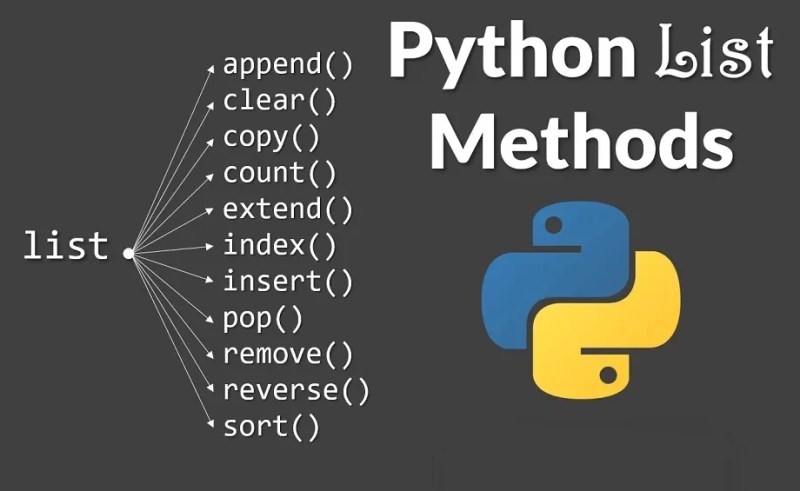
- Rich Built-in Methods: Operations like `sort()`, `reverse()`, and `count()` are optimized at the language level, reducing the need for custom implementations.
- Memory Efficiency (When Managed Well): While resizing can be costly, pre-allocation and understanding amortized time complexity help mitigate overhead.
- Integration with Python Ecosystem: Lists seamlessly interact with libraries like NumPy, Pandas, and SciPy, serving as bridges between raw data and high-level analysis.

Comparative Analysis
While Python lists excel in flexibility, other data structures offer trade-offs worth considering. Below is a comparison of Python lists with alternatives:| Feature | Python Lists | Tuples | Sets | Dictionaries |
|---|---|---|---|---|
| Mutability | Fully mutable (elements can be added/removed/modified). | Immutable (cannot be altered after creation). | Mutable (elements can be added/removed). | Mutable (keys/values can be added/removed). |
| Order Preservation | Yes (insertion order maintained). | Yes (insertion order maintained). | No (unordered until Python 3.7+). | No (unordered until Python 3.7+). |
| Duplicates Allowed | Yes. | Yes. | No (sets enforce uniqueness). | No (keys must be unique). |
| Use Case | General-purpose data storage and manipulation. | Fixed collections (e.g., constants, array-like structures). | Membership testing and uniqueness enforcement. | Key-value pair storage and fast lookups. |
Future Trends and Innovations
As Python continues to evolve, so too will the role of Python lists. One emerging trend is the integration of lists with just-in-time (JIT) compilation, as seen in projects like Numba. JIT compilation can accelerate list operations by translating Python bytecode into optimized machine code, bridging the gap between Python’s dynamism and performance-critical applications. Additionally, advancements in memory management—such as better handling of large lists in constrained environments—will further solidify their place in embedded systems and edge computing.Another frontier is the interplay between Python lists and emerging data structures. For example, the rise of probabilistic data structures (like Bloom filters) may see Python lists serving as hybrid containers for approximate algorithms. Meanwhile, Python’s growing adoption in quantum computing could lead to specialized list-like structures optimized for qubit manipulation. Regardless of these innovations, the core principles of Python lists—flexibility, readability, and performance—will remain their defining strengths.
Conclusion
Python lists are far more than a basic data structure; they are the linchpin of Python’s expressiveness and efficiency. Their ability to balance dynamic behavior with performance makes them indispensable in both small scripts and large-scale systems. For developers, mastering Python lists is not just about syntax—it’s about understanding the trade-offs between flexibility and optimization, and how to leverage them effectively.As Python’s ecosystem expands, the role of lists will only grow. Whether in machine learning, web development, or scientific computing, Python lists remain the default choice for data manipulation. Their evolution reflects Python’s broader trajectory: a language that adapts to modern challenges while retaining its core strengths.
Comprehensive FAQs
Q: Are Python lists thread-safe?
A: No, Python lists are not thread-safe by default. Concurrent modifications from multiple threads can lead to race conditions. For thread-safe operations, use locks (`threading.Lock`) or consider alternatives like `queue.Queue`.
Q: How do Python lists handle memory when resizing?
A: Python lists use a dynamic array approach, doubling their capacity during resizing to amortize the cost. This means that while individual resizes are O(n), the average time per append operation remains O(1). Pre-allocating space (e.g., with `list.__init__(capacity)`) can reduce overhead in performance-sensitive applications.
Q: Can Python lists store custom objects?
A: Yes, Python lists can store any object, including custom classes. However, if the objects are mutable, modifications within the list may lead to unintended side effects due to shared references. For immutable objects (e.g., tuples), this risk is mitigated.
Q: What’s the difference between `list.append()` and `list.extend()`?
A: `append()` adds a single element to the end of the list, increasing its length by one. `extend()`, on the other hand, iterates over an iterable (e.g., another list) and adds each element individually, effectively concatenating the iterable to the end of the list. For example, `list.extend([1, 2])` is equivalent to `list.append(1); list.append(2)`.
Q: How do Python lists compare to NumPy arrays?
A: Python lists are flexible but slower for numerical operations due to their dynamic nature. NumPy arrays, by contrast, are optimized for homogeneous numerical data and support vectorized operations, making them significantly faster for large-scale computations. Lists are better for mixed data types or small-scale tasks, while NumPy arrays excel in scientific computing.
Q: Are there performance pitfalls when using nested Python lists?
A: Yes, nested lists can lead to memory inefficiencies and slower operations due to shallow copying during slicing or assignment. For deep copies, use `copy.deepcopy()`. Additionally, nested lists may trigger excessive resizing if not pre-allocated, impacting performance in loops or large datasets.
Leave a Comment
Comments are moderated before appearing. The data you submit is processed according to the Privacy Policy of Surfchex.