Tag
data structures
-

Python Tuple: The Immutable Workhorse Behind Efficient Data Handling
The elegance of a Python tuple lies in its simplicity: a comma-separated sequence of elements enclosed in parentheses. Yet beneath this deceptive simplicity...
-

Python Lists: The Backbone of Data Handling in Modern Programming
The elegance of Python lists lies in their simplicity. A single line of code—`my_list = [1, "apple", 3.14]`—can encapsulate heterogeneous data, a feature...
-

How Python’s Arrays Work: A Deep Dive Into Performance, Syntax, and Real-World Use
The evolution of arrays in Python mirrors the language’s broader trajectory: from a general-purpose scripting tool to a powerhouse for data-intensive tasks...
-

Unlocking the Foundation: What Is an Ordered Pair and Why It Matters
The elegance of an ordered pair lies in its duality: two distinct elements bound by a rule that their order cannot be ignored. This principle isn’t just...
-

How JavaScript Maps Reshape Modern Data Handling
The Map object in JavaScript isn’t just another data structure—it’s a paradigm shift in how developers handle key-value pairs. Unlike traditional objects, a js...
-

How to Properly Initialize Vector C in Modern Programming
The term vector in this context refers not to mathematical vectors but to contiguous memory blocks that emulate array-like behavior with dynamic resizing. This...
-

What in an Integer? The Hidden Math Behind Data, Code, and Reality
The number 42 isn’t just a joke in The Hitchhiker’s Guide to the Galaxy —it’s an integer, a silent architect of logic in systems far beyond fiction. While most...
-

Mastering Python Deque: The Double-Ended Powerhouse for High-Performance Data Handling
The elegance of the python deque lies in its simplicity: a thread-safe, memory-efficient container that extends beyond basic queue functionality. Whether...
-

How to Add to a Dictionary in Python: A Deep Dive into Dynamic Data Manipulation
The versatility of Python dictionaries extends beyond simple key-value pairs. They support nested dictionaries, default values, and even custom objects as...
-

The Hidden Power of Null Meaning in Language, Code, and Thought
Consider the SQL database query that crashes because a field expects a value but receives NULL . Or the literary device where a character’s refusal to speak...
-

How Python's heapq Transforms Data Prioritization and Efficiency
What sets heapq apart is its adherence to the min-heap invariant by default, though it can be adapted for max-heap scenarios with simple transformations. This...
-
How to Multiply Arrays: The Definitive Guide to Scaling Data Structures
The concept of how to multiply arrays transcends programming languages. In Python, NumPy’s `dot()` function handles element-wise and matrix multiplication with...
-

Mastering Python Collections: The Hidden Powerhouse of Data Handling
The power of Python collections isn’t just theoretical. In high-traffic applications, these structures can reduce latency by 30% or more compared to naive...
-
The Definitive Guide to Building Adjacency Lists in C: From Theory to Implementation
Mastering how to create a adjacency list in C isn't just about syntax; it's about understanding the tradeoffs between memory locality and traversal efficiency...
-

Mastering Priority Queue Java: The Engine Behind Efficient Task Scheduling
What separates a well-optimized priority queue Java from a naive implementation? The answer lies in balancing time complexity with flexibility. A poorly tuned...
-

How Heap Sort Dominates High-Stakes Data Organization
What makes heap sort uniquely resilient? Its foundation isn’t in comparisons alone but in the binary heap—a complete tree where parent nodes always dominate...
-
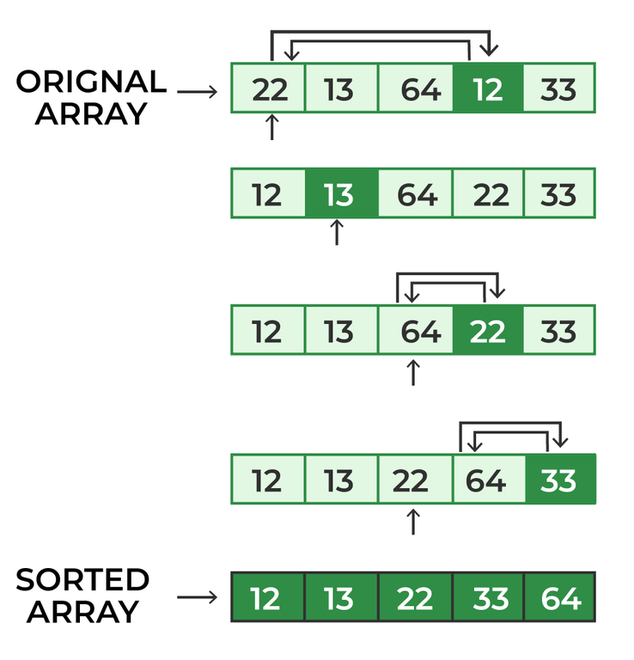
How Selection Sort Works: The Algorithm’s Hidden Efficiency
The beauty of selection sort lies in its straightforwardness. At its core, it repeatedly scans an unsorted list, picks the smallest (or largest) element, and...
-

How the AVL Tree Revolutionized Balanced Data Structures
What makes the AVL tree truly remarkable is its marriage of theoretical elegance and practical utility. In systems where data integrity and speed are...
-

Mastering How to Return an Array in Java: A Definitive Technical Deep Dive
The distinction between returning primitive arrays and object arrays introduces layers of complexity. For instance, returning a `String[]` versus an `int[]`...

