Why python hello world Still Matters in 2024: Beyond the Basics

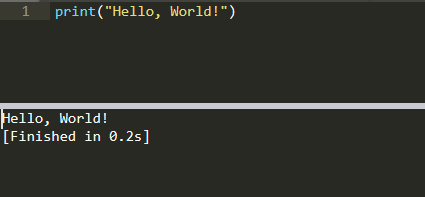
The first time a developer encounters the phrase "python hello world", it’s often met with a mix of skepticism and curiosity. Why start with something so trivial? Because beneath its simplicity lies a microcosm of Python’s philosophy—explicit clarity, minimalism, and immediate practicality. The program itself, `print("Hello, World!")`, spans just 17 characters (excluding the shebang), yet it encapsulates decades of language design: Guido van Rossum’s rejection of C-style verbosity, the influence of ABC (his earlier language), and the deliberate choice to make syntax readable even for non-programmers. This isn’t just about printing text; it’s about establishing a mental model for how Python thinks—where whitespace dictates structure, where indentation isn’t optional punctuation, and where the interpreter’s feedback loop is as much a teacher as the code itself.
What follows is rarely discussed: the "python hello world" program’s role as a litmus test for debugging environments. A misplaced colon, an unclosed parenthesis, or an incorrect shebang (`#!/usr/bin/env python3`) can turn a trivial exercise into a lesson in toolchain configuration. This is where the rubber meets the road—where beginners learn that Python’s "batteries included" philosophy extends to its error messages, which often point to solutions rather than just syntax failures. Even seasoned developers revisit this snippet when setting up new environments, proving that the "python hello world" test is as much about infrastructure as it is about code.
The persistence of "python hello world" in tutorials, from Automate the Boring Stuff with Python to Harvard’s CS50, reveals its dual nature: a pedagogical crutch and a technical benchmark. It’s the first step in a journey that will later involve web frameworks, data pipelines, or AI models—but the journey begins here, with a program that, in its brevity, forces developers to confront Python’s core tenets: readability, simplicity, and the power of a well-designed syntax.
The Complete Overview of Python’s "Hello, World!"
At its core, the "python hello world" program is a distilled example of Python’s design principles: explicit is better than implicit, and simple is better than complex. The program’s structure—`print("Hello, World!")`—demonstrates Python’s reliance on whitespace for code blocks, a feature borrowed from ABC that sets it apart from languages like C or Java. This choice wasn’t arbitrary; it was a deliberate rejection of braces and semicolons, which van Rossum argued obscured the logical flow of code. The "python hello world" snippet thus serves as a microcosm of Python’s philosophy: code should be written for humans first, machines second.Yet, the program’s simplicity belies its role as a gateway to deeper concepts. For instance, the `print()` function in "python hello world" isn’t just a placeholder—it’s an introduction to Python’s dynamic typing, where strings are objects with methods (e.g., `.upper()`), and functions are first-class citizens. Even the shebang (`#!`) in scripts like `#!/usr/bin/env python3` hints at Python’s portability and the Unix tradition of executable scripts. This is why the "python hello world" exercise is often paired with discussions on file permissions (`chmod +x`), environment variables (`PATH`), and interpreter paths—a reminder that programming is as much about system interaction as it is about logic.
Historical Background and Evolution
The "python hello world" program traces its lineage to the earliest Python implementations in the late 1980s, when van Rossum sought to create a language that was easy to read, easy to write, and easy to maintain. The choice of `"Hello, World!"` as the canonical first program wasn’t unique to Python—it originated in Brian Kernighan and P.J. Plauger’s The C Programming Language (1978)—but Python’s execution of it reflected its identity. Unlike C’s `printf("Hello, World!\n");`, Python’s version required no semicolons, no type declarations, and no preprocessor directives. This minimalism was intentional: Python was designed to reduce cognitive overhead for developers.The evolution of "python hello world" mirrors Python’s growth as a language. In Python 2.x, the program might have used `print "Hello, World!"` (without parentheses), a syntax that was later deprecated in favor of Python 3’s `print()` function. This change wasn’t just syntactic—it was a nod to Python’s commitment to forward compatibility and explicit function calls, even for built-ins. Meanwhile, the rise of Python’s popularity in data science (thanks to libraries like NumPy and Pandas) has repurposed the "python hello world" program as a sanity check for environments like Jupyter notebooks or Docker containers, where the first step is often verifying the Python kernel or interpreter version.
Core Mechanisms: How It Works
Under the hood, the "python hello world" program triggers a cascade of operations that reveal Python’s architecture. When executed, the interpreter first checks the shebang (if present) to locate the correct Python binary. It then parses the source code, tokenizing the `print` keyword, the string literal `"Hello, World!"`, and the surrounding parentheses. The `print()` function, a built-in, is then called with the string as an argument. Python’s object model ensures that the string is passed by reference, and the function’s implementation (which varies by Python version) handles the actual I/O operation, typically writing to `sys.stdout`.Table of Contents
- The Complete Overview of Python’s "Hello, World!"
- Historical Background and Evolution
- Core Mechanisms: How It Works
- Key Benefits and Crucial Impact
- Major Advantages
- Comparative Analysis
- Future Trends and Innovations
- Conclusion
- Comprehensive FAQs
- Q: Why does the "python hello world" program use `print()` instead of just `print`?
- Q: Can I run "python hello world" without saving it to a file?
- Q: What happens if I forget the `()` in Python 3?
- Q: How does "python hello world" differ in Python 2 vs. Python 3?
- Q: Can I use "python hello world" in a web browser without a server?
- Q: Why do some tutorials use `#!/usr/bin/env python3` in the first line?
- Q: What’s the most obscure way to print "Hello, World!" in Python?
The simplicity of "python hello world" masks its dependency on Python’s Global Interpreter Lock (GIL), which ensures thread safety during execution. Even in this trivial case, the GIL prevents race conditions when multiple threads attempt to print simultaneously. This is a subtle but critical lesson: every Python program, no matter how small, operates within a larger ecosystem of concurrency, memory management, and system integration. The "python hello world" program, therefore, isn’t just about printing text—it’s about understanding the runtime environment that makes Python tick.
Key Benefits and Crucial Impact
The "python hello world" program’s enduring relevance stems from its ability to demonstrate Python’s strengths in a single line of code. It’s a microcosm of Python’s batteries-included philosophy, where even the most basic operation is backed by robust, well-documented functionality. For example, the `print()` function in "python hello world" can be extended with separators, end characters, or file redirection—features that hint at Python’s flexibility for more complex tasks like logging or file I/O. This scalability is one reason why "python hello world" is often the first step in tutorials for web development (Flask/Django), automation (Selenium), or data analysis (Pandas).Beyond its technical merits, the "python hello world" program serves as a psychological anchor for new developers. The immediate feedback loop—seeing `"Hello, World!"` printed to the terminal—creates a sense of accomplishment that motivates further exploration. This is why variations of the program (e.g., `"python hello world"` in a web browser using Pyodide, or in an embedded system with MicroPython) are used to teach cross-platform development. The program’s simplicity makes it an ideal entry point for understanding how Python interacts with different environments, from local terminals to cloud-based Jupyter notebooks.
"The python hello world program is not just a tradition; it’s a test of the environment’s integrity. If it fails here, it will fail everywhere."
Major Advantages
- Readability and Maintainability: The "python hello world" program’s lack of semicolons or braces emphasizes Python’s clean syntax, a trait that scales to large codebases. This readability reduces the time-to-understanding for new developers and collaborators.
- Immediate Feedback: Running `"python hello world"` provides instant validation of the Python environment, making it a quick sanity check for developers setting up new machines, containers, or cloud instances.
- Cross-Platform Portability: The program works identically across operating systems (Windows, macOS, Linux) and architectures (x86, ARM), demonstrating Python’s "write once, run anywhere" capability.
-
Educational Scalability: The "python hello world" program can be extended to teach advanced topics, such as:
- String formatting (`f"Hello, {name}!"`)
- Error handling (`try-except` blocks)
- Environment variables (`os.getenv()`)
- Community and Standardization: The ubiquity of "python hello world" in tutorials and documentation ensures consistency across learning resources, reducing cognitive fragmentation for new developers.

Comparative Analysis
| Aspect | Python ("hello world") | Java ("HelloWorld") | JavaScript ("console.log") | C ("printf") |
|---|---|---|---|---|
| Syntax Complexity | Minimal (`print("...")`) | Verbose (`public static void main`) | Moderate (`console.log("...")`) | Moderate (`printf("...")`) |
| Environment Setup | Simple (interpreter-based) | Complex (JVM required) | Simple (browser/Node.js) | Moderate (compiler/linker) |
| Error Handling | Descriptive (points to line/column) | Verbose (stack traces) | Minimal (runtime errors) | Minimal (compiler errors) |
| Scalability | High (dynamic typing, libraries) | High (static typing, JVM) | High (prototype-based) | Moderate (manual memory management) |
Future Trends and Innovations
The "python hello world" program is evolving alongside Python itself. With the rise of Python 3.12+, the program now benefits from optimizations like faster function calls and type hints, which can be added to the snippet as `print("Hello, World!") -> None`. Meanwhile, the growth of Python in web assembly (Pyodide) and edge computing has given rise to variations like `"python hello world"` running in a browser or on a Raspberry Pi, blurring the line between traditional and embedded environments.Looking ahead, the "python hello world" program may become a benchmark for Python’s performance in new execution models, such as Python’s experimental JIT compiler (PEP 684) or WebAssembly integration. Additionally, as Python continues to dominate AI/ML workflows, the program might be repurposed to include basic tensor operations (e.g., `import torch; print("Hello, World!")`), bridging the gap between classical programming and modern applications. The future of "python hello world" isn’t just about printing text—it’s about redefining what "hello" means in a rapidly changing technical landscape.
Conclusion
The "python hello world" program is far more than a beginner’s first step—it’s a living document of Python’s evolution, a technical benchmark, and a pedagogical tool. Its simplicity belies its depth, touching on syntax, environment configuration, and even philosophical choices in language design. For developers, revisiting this program—whether in a new Python version, a different OS, or an unconventional environment—is a reminder of the language’s resilience and adaptability.As Python continues to grow in domains like quantum computing (Qiskit), cybersecurity (Scapy), and game development (Pygame), the "python hello world" program will remain a constant. It’s the canonical entry point not just for new coders, but for anyone seeking to understand how Python’s principles apply in practice. In a world where programming languages come and go, the enduring relevance of "python hello world" is a testament to Python’s ability to balance simplicity with power.
Comprehensive FAQs
Q: Why does the "python hello world" program use `print()` instead of just `print`?
A: In Python 3, `print` became a function (`print()`) to consistently handle multiple arguments (e.g., `print("Hello", "World")`) and to align with Python’s functional design. Python 2’s `print` statement was deprecated to enforce this change, ensuring backward compatibility wasn’t prioritized over cleaner syntax. The parentheses also allow for keyword arguments (e.g., `print("Hello", end="\n")`).
Q: Can I run "python hello world" without saving it to a file?
A: Yes. In Python 3, you can use the `-c` flag to execute code directly:
python3 -c "print('Hello, World!')"
This is useful for quick tests or one-liners in scripts. However, saving to a file (e.g., `hello.py`) is still recommended for reusability and version control.
Q: What happens if I forget the `()` in Python 3?
A: You’ll encounter a SyntaxError because `print` is a function in Python 3. The interpreter expects parentheses even if no arguments are passed. This is a deliberate design choice to distinguish between functions and statements, reducing ambiguity in the language.
Q: How does "python hello world" differ in Python 2 vs. Python 3?
A: The key differences are:
- Syntax: Python 2: `print "Hello, World!"`; Python 3: `print("Hello, World!")`.
- Unicode: Python 3 treats strings as Unicode by default, while Python 2 uses ASCII unless prefixed with `u`.
- Division: In Python 2, `1/2` equals `0` (integer division); in Python 3, it equals `0.5` (true division).
- Print Function: Python 2’s `print` is a statement; Python 3’s is a function.
Q: Can I use "python hello world" in a web browser without a server?
A: Yes, using Pyodide (Python compiled to WebAssembly). You can run:
This demonstrates Python’s portability beyond traditional environments.
Q: Why do some tutorials use `#!/usr/bin/env python3` in the first line?
A: The shebang (`#!`) tells the system which interpreter to use when the script is executed as a file with permissions (`chmod +x`). `#!/usr/bin/env python3` is portable because it:
- Uses `env` to locate Python in the user’s `PATH`.
- Avoids hardcoding paths (e.g., `/usr/bin/python3`), which may vary by OS.
- Ensures the script runs with the correct Python version (critical for Python 2 vs. 3 differences).
Q: What’s the most obscure way to print "Hello, World!" in Python?
A: Here are three unconventional methods:
__import__('builtins').print("Hello, World!")(explicitly importing the `print` function).open(1, 'w').write("Hello, World!\n")(writing directly to `stdout` file descriptor 1).exec("print('Hello, World!')")(using `exec` to dynamically evaluate the string).
Leave a Comment
Comments are moderated before appearing. The data you submit is processed according to the Privacy Policy of Surfchex.